Bahariya Oasis Egypt Travel Guide
Bahariya Oasis Egypt: The Complete Travel Guide to the Gateway of the White Desert
Bahariya Oasis is where Egypt’s desert becomes surreal.
Most travelers arrive in Egypt expecting pyramids, temples, and the Nile. Those landmarks define the country’s ancient story, but they represent only one part of Egypt’s geography. Beyond the Nile Valley stretches the vast Western Desert — a landscape of volcanic hills, chalk formations, and endless sand seas that feel completely different from the Egypt most people imagine.
Bahariya Oasis sits at the edge of that desert world.
Located roughly 370 kilometers southwest of Cairo, the oasis acts as the main gateway to the extraordinary landscapes of Egypt’s White Desert National Park. Travelers who venture here trade crowded monuments for open horizons, geological wonders, and nights under some of the clearest stars in North Africa.
In Bahariya, the highlights are not temples or museums. Instead, visitors explore volcanic hills in the Black Desert, drive across towering dunes, discover crystal-filled ridges in the Sahara, and watch sunset transform the chalk formations of the White Desert into glowing sculptures of stone.
The oasis itself offers another layer of interest. Palm groves surround small villages, natural hot springs emerge from the desert floor, and archaeological discoveries — including the famous Valley of the Golden Mummies — reveal that Bahariya has been inhabited for thousands of years.
For travelers interested in nature, adventure, and a deeper understanding of Egypt’s landscapes, Bahariya Oasis offers one of the country’s most unforgettable experiences.
This guide explains everything you need to know before visiting Bahariya Oasis: where it is, what to see, how long to stay, when to go, and how it fits into a complete Egypt itinerary.
Where Is Bahariya Oasis — And Why Its Location Matters
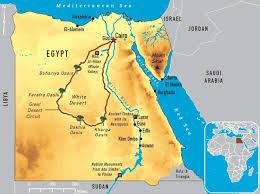
Bahariya Oasis sits deep within Egypt’s Western Desert, roughly 370 kilometers (230 miles) southwest of Cairo. While that distance sounds significant, the drive typically takes about four to five hours, making Bahariya the most accessible major oasis from Egypt’s capital.
That accessibility is the key reason Bahariya has become the gateway to Egypt’s most famous desert landscapes.
Unlike Siwa Oasis — which lies much farther west near the Libyan border — Bahariya occupies a central position within the Western Desert. Historically, this location made it an important stopping point along ancient caravan routes crossing the Sahara, linking Egypt with Libya and other regions of North Africa.
Today, Bahariya plays a similar role for travelers.
It marks the point where Egypt’s cultivated Nile Valley gives way to the immense emptiness of the Sahara. From Bahariya, desert tracks lead into some of the most extraordinary environments in the country:
- the Black Desert, covered with volcanic hills and dark basalt stones
- the sparkling ridge known as Crystal Mountain
- and most famously, White Desert National Park, where wind has sculpted chalk bedrock into towering formations that resemble giant mushrooms, towers, and abstract statues.
Geographically, Bahariya sits within a large natural depression surrounded by desert plateaus and low mountains. Underground aquifers feed springs that allow palm groves and agricultural fields to exist in the middle of an otherwise harsh desert landscape. This combination of fertile oasis and surrounding desert made Bahariya a sustainable settlement for thousands of years.
Because of this geography, most travelers do not visit Bahariya as a standalone destination. Instead, it functions as a launch point for desert exploration.
Travelers typically arrive in the oasis village, meet their desert guides, and then continue deeper into the Sahara by 4×4 vehicle, exploring volcanic landscapes, sand dunes, and the surreal chalk formations of the White Desert.
Understanding Bahariya’s location helps explain its role in an Egypt itinerary. It is not another city filled with monuments. It is the transition point between Egypt’s populated heartland and the vast desert wilderness that surrounds it.
For travelers willing to leave the familiar Nile corridor behind, Bahariya opens the door to one of the most dramatic and least expected landscapes in Egypt.
Why Travelers Visit Bahariya Oasis
Travelers visit Bahariya Oasis for experiences that feel completely different from the Egypt most people expect.
In places like Cairo, Luxor, and Aswan, travel revolves around ancient monuments, temples, and museums. Bahariya offers something else entirely. Here the attraction is not architecture built by ancient civilizations — it is the raw landscape of the Sahara itself.
The oasis sits on the edge of some of Egypt’s most extraordinary geological environments, which makes it a natural destination for travelers interested in desert exploration, unusual landscapes, and outdoor adventure.
The White Desert: Egypt’s Most Surreal Landscape
For many visitors, the primary reason to visit Bahariya is the White Desert National Park.
Over thousands of years, wind and sand carved the soft chalk bedrock into strange formations that resemble giant mushrooms, towers, animals, and frozen waves of stone. These shapes rise from the desert floor like sculptures, creating one of the most surreal landscapes in North Africa.
At sunrise and sunset the formations glow with warm colors, making the White Desert one of the most dramatic places in Egypt for photography and stargazing.
The Black Desert and Volcanic Hills
Just south of the oasis lies the Black Desert, a landscape covered in dark volcanic stones and basalt hills. These formations were created by ancient volcanic activity and now create a striking contrast against the surrounding sand.
Climbing one of the hills offers wide views across the desert plains and reveals the scale of the landscape surrounding Bahariya.
Desert Safaris and Sahara Exploration
Bahariya is also the main starting point for desert safari expeditions.
Travelers typically explore the surrounding desert by 4×4 vehicle, visiting multiple landscapes in a single journey — volcanic hills, fossil fields, sand dunes, and chalk formations.
Many tours include overnight desert camping, where visitors sleep beneath clear skies filled with stars and experience the quiet atmosphere of the Sahara far from modern cities.
For many travelers, this overnight desert experience becomes one of the most memorable parts of their entire Egypt trip.
Natural Springs and Oasis Life
Despite the harsh desert surroundings, Bahariya itself is green and fertile.
Palm groves, small farms, and natural hot springs provide water and shade in the oasis. After a day exploring the desert, many visitors relax in warm mineral springs or walk through the village streets lined with date palms and olive trees.
These springs have supported human settlement in the oasis for centuries and continue to shape daily life today.
Archaeological Discoveries
Although Bahariya is known primarily for its landscapes, it also has an important historical dimension.
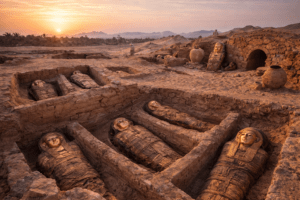
The discovery of the Valley of the Golden Mummies in the 1990s revealed hundreds of mummies from the Greco-Roman period, many decorated with gold masks and elaborate burial coverings. This discovery demonstrated that Bahariya once served as a prosperous oasis connected to wider trade networks across Egypt.
A Different Side of Egypt
Ultimately, travelers visit Bahariya because it reveals a different dimension of Egypt.
Instead of monumental temples and crowded historic sites, the oasis offers open desert horizons, geological wonders, and the quiet atmosphere of the Sahara.
For travelers interested in adventure, natural landscapes, and experiences beyond the classic tourist route, Bahariya Oasis provides one of the most unexpected and memorable destinations in the country.
The Landscape of Bahariya Oasis
The landscape surrounding Bahariya Oasis is one of the most unusual and visually dramatic environments in Egypt. While the Nile Valley is defined by fertile farmland and the Red Sea coast by coral reefs and clear water, Bahariya sits at the meeting point of several different desert landscapes that have been shaped over millions of years.
This region of the Western Desert contains volcanic hills, limestone plateaus, fossil beds, sand dunes, and chalk formations, all within a relatively small area. The result is a desert environment that changes constantly as you travel through it.
Understanding the landscape helps explain why Bahariya became the starting point for so many desert expeditions.
The Oasis Basin
At the center of the region lies the oasis itself.
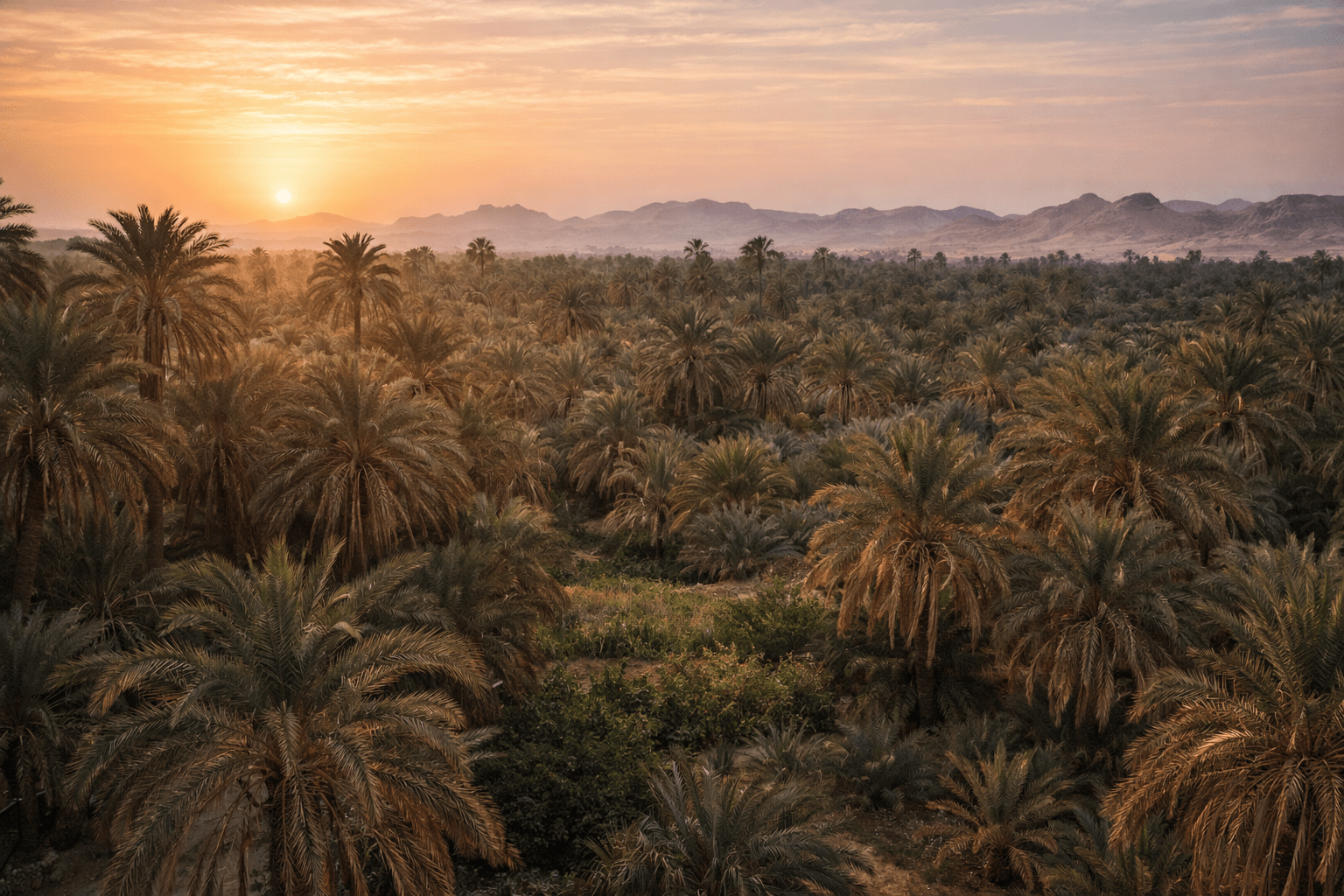
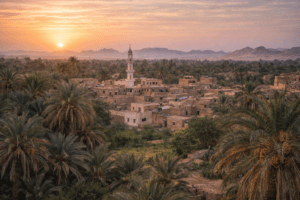
Bahariya sits within a large natural depression, where underground aquifers allow water to reach the surface. This water supports thousands of date palms, olive trees, and small agricultural fields that provide the economic foundation for the local community.
From above, the oasis appears as a green island in the middle of the Sahara. Palm groves cluster around villages, while desert hills rise around the edges of the basin.
Natural springs scattered throughout the oasis have supported human settlement here for thousands of years.
The Black Desert
Just beyond the oasis begins the Black Desert, one of the most distinctive landscapes in Egypt.
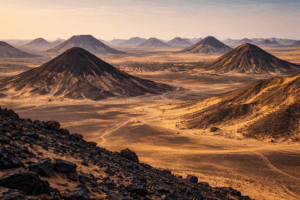
Unlike the sweeping sand dunes that many travelers associate with the Sahara, the Black Desert is characterized by low volcanic hills covered with dark basalt stones. These hills formed from ancient volcanic activity, leaving layers of black rock that contrast sharply with the pale desert floor.
The dark slopes absorb sunlight, giving the region its name.
Climbing one of the hills provides panoramic views across the surrounding desert plains and reveals the scale of the landscape surrounding Bahariya.
Crystal Mountain
Between the Black Desert and the White Desert lies a formation known as Crystal Mountain.
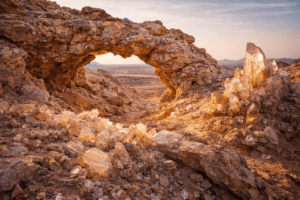
This ridge contains veins of quartz crystals embedded within the rock. When sunlight hits the crystals, the entire formation sparkles, creating a striking visual contrast with the surrounding sand and stone.
Although relatively small, Crystal Mountain highlights the geological diversity of the region and has become a common stop on desert safari routes.
The White Desert
Further south lies the most famous landscape of the region: White Desert National Park.
Here the desert floor is composed primarily of chalk and limestone. Over thousands of years, wind erosion carved this soft rock into towering formations that resemble giant mushrooms, towers, and abstract sculptures.
Some formations rise several meters above the desert floor, appearing almost like frozen waves of stone.
The White Desert is especially dramatic at sunrise and sunset, when the low angle of the sun casts long shadows across the formations and transforms their color from bright white to shades of gold, pink, and orange.
Because of its unusual geology and fragile environment, the area is protected as a national park and is best explored with experienced desert guides.
Fossils and Ancient Seas
Another remarkable aspect of Bahariya’s landscape is its fossil history.
Millions of years ago, large parts of Egypt’s Western Desert were covered by ancient seas. Over time, sediments preserved marine fossils within the rock layers of the region.
Today, fossil fragments can still be found in parts of the desert around Bahariya, providing evidence of the ancient environments that once existed here.
A Landscape Built by Time
The landscapes surrounding Bahariya are the result of millions of years of geological processes — volcanic activity, sediment deposition, erosion by wind and sand, and shifting desert climates.
For travelers, this creates an experience unlike anywhere else in Egypt.
Within a single day, you can move from fertile palm groves to volcanic hills, crystal ridges, and surreal chalk formations rising from the desert floor.
It is this diversity of landscapes that makes Bahariya Oasis one of the most fascinating gateways into the Sahara.
The Best Things to Do in Bahariya Oasis
Although Bahariya Oasis itself is a quiet desert settlement, the surrounding region offers some of the most fascinating landscapes and experiences in Egypt. Most visits to Bahariya revolve around desert exploration, geological sites, and oasis culture, rather than traditional monuments.
The following highlights form the core of a well-planned Bahariya itinerary.
Explore the Black Desert
One of the first landscapes travelers encounter when leaving Bahariya Oasis is the Black Desert.
Unlike the golden dunes many people imagine when thinking of the Sahara, the Black Desert is covered with dark volcanic stones and basalt hills that rise from the desert floor. These hills formed millions of years ago during periods of volcanic activity that shaped the geology of Egypt’s Western Desert.
The result is a striking environment where dark slopes contrast sharply with pale sand plains.
Many desert tours include a short climb up one of the volcanic hills. From the top, visitors can see vast desert horizons stretching in every direction. The view reveals how isolated the oasis truly is — a small green pocket surrounded by enormous open desert.
For photographers, the Black Desert provides dramatic textures and colors that change throughout the day as sunlight moves across the hills.
Visit White Desert National Park
The White Desert National Park is the most famous attraction in the Bahariya region and the primary reason many travelers visit the oasis.
Over thousands of years, wind erosion sculpted the soft chalk bedrock into extraordinary shapes. These formations resemble giant mushrooms, towers, animals, and abstract sculptures rising from the desert floor.
Some formations reach several meters in height and appear almost like natural monuments scattered across the landscape.
The White Desert is especially dramatic during sunrise and sunset, when the changing light transforms the chalk formations from bright white to shades of gold, orange, and pink.
Because the terrain is remote and fragile, visitors explore the White Desert with experienced desert guides and 4×4 vehicles.
Many travelers choose to stay overnight in the desert to experience both sunset and sunrise among the formations.
Discover Crystal Mountain
Crystal Mountain is a small but fascinating geological feature located along the desert route between the Black Desert and the White Desert.
The ridge contains deposits of quartz crystals embedded in the rock. Sunlight reflecting off these crystals creates a shimmering effect that stands out dramatically against the surrounding desert landscape.
Although it is a brief stop on most desert tours, Crystal Mountain offers a glimpse into the geological diversity of the Western Desert and provides a striking contrast with the chalk formations of the White Desert.
Experience an Overnight Desert Safari
For many travelers, the highlight of visiting Bahariya is an overnight desert safari.
After arriving at the oasis, visitors typically travel into the desert by 4×4 vehicle, guided by local drivers who know the terrain and routes through the Sahara.
A typical safari may include:
• Driving across sand dunes and desert plains
• Exploring the Black Desert and Crystal Mountain
• Visiting the rock formations of the White Desert
• Stopping at remote desert springs
• Watching sunset from high dunes or rock formations
As evening approaches, guides set up a desert camp among the chalk formations.
Dinner is often prepared over a campfire while travelers watch the sky fill with stars. With no nearby cities or artificial lights, the night sky in the desert becomes incredibly clear, revealing constellations and the Milky Way in remarkable detail.
Sleeping in the desert — surrounded by silence and open horizons — is an experience many travelers describe as one of the most memorable moments of their entire Egypt trip.
Relax in Bahariya’s Natural Hot Springs
Bahariya Oasis contains several natural hot springs, where mineral-rich water emerges from underground aquifers.
These springs have been used for centuries by local residents for relaxation and therapeutic bathing.
One of the most visited springs is Bir Sigam, where warm water pools are surrounded by palm trees and desert views.
After a long day exploring the desert landscapes, soaking in a hot spring provides a relaxing contrast to the heat and dust of desert travel.
Visit the Valley of the Golden Mummies
Although Bahariya is best known for its natural landscapes, the oasis also holds an important archaeological site.
In the late 1990s, archaeologists discovered hundreds of mummies in an area now known as the Valley of the Golden Mummies. Many of the mummies date to the Greco-Roman period and were buried with elaborate decorations, including gold masks and painted coverings.
The discovery revealed that Bahariya was once a prosperous oasis connected to wider trade networks across Egypt and the Mediterranean.
Although only part of the site is accessible to visitors, it remains one of the most significant archaeological discoveries in Egypt in recent decades.
Walk Through Bahariya Village and Palm Groves
While the surrounding desert often receives the most attention, the oasis village itself offers a glimpse into traditional desert life.
Palm groves surround the settlement, creating shaded paths between fields and homes. Small farms produce dates, olives, and vegetables that sustain the local community.
Walking through these groves reveals the agricultural system that has supported life in Bahariya for generations.
Local markets and cafés provide opportunities to experience the slower rhythm of life in the oasis — a contrast to the intense pace of Egypt’s major cities.
Watch the Desert Sunset
Sunset in the desert around Bahariya is one of the most beautiful moments of the day.
As the sun lowers toward the horizon, the desert landscape changes color dramatically. The volcanic hills of the Black Desert deepen into dark silhouettes, while the chalk formations of the White Desert glow with warm golden light.
Many desert tours plan stops specifically for sunset viewing because the shifting colors create one of the most memorable scenes in the Sahara.sperous settlement connected to wider trade networks across Egypt and the Mediterranean.
Desert Safari in Bahariya: What the Experience Actually Feels Like
A desert safari from Bahariya Oasis is not just a sightseeing excursion — it is an immersion into one of the most dramatic environments on Earth.
Once you leave the oasis village behind, paved roads disappear quickly. The palm groves fade into the distance, and the landscape opens into wide desert plains where volcanic hills, dunes, and chalk formations stretch across the horizon.
From that point forward, the journey becomes part of the experience.
Traveling Into the Sahara
Most desert safaris begin in four-wheel-drive vehicles operated by experienced local guides. These drivers know the terrain intimately and navigate routes that weave between volcanic ridges, fossil fields, and sweeping sand dunes.
The first stage of the journey often crosses the Black Desert, where dark volcanic stones cover the slopes of low mountains. The landscape here feels rugged and ancient, shaped by geological forces that formed the region millions of years ago.
As the journey continues south, the terrain begins to change.
The volcanic hills fade into open desert plains, and the color of the ground shifts from dark basalt to pale sand and limestone.
Entering the White Desert
Eventually the landscape transforms into the surreal environment of White Desert National Park.
Here, wind erosion has sculpted the chalk bedrock into formations that look almost like sculptures. Towering columns, mushroom-shaped rocks, and strange abstract structures rise from the desert floor.
Driving between these formations feels like moving through an outdoor gallery carved by nature itself.
Because the desert is constantly shaped by wind and sand, the formations continue to evolve slowly over time.
Sunset in the White Desert
Late afternoon is one of the most magical moments of a desert safari.
As the sun lowers toward the horizon, the bright white chalk formations begin to change color. Shadows stretch across the desert floor, and the rocks glow with shades of gold, pink, and soft orange.
Most guides choose a scenic spot among the formations for sunset.
Travelers often climb small ridges or dunes to watch the sun disappear behind the desert hills. The silence of the desert at this moment is remarkable — broken only by wind moving across the sand.
Camping Under the Desert Sky
After sunset, desert camps are typically set up among the chalk formations.
Guides prepare dinner over a fire while travelers gather around to share tea and watch the sky grow darker. Without the light pollution of cities, the desert sky becomes incredibly clear.
Stars appear in vast numbers, and the Milky Way often becomes visible stretching across the horizon.
Sleeping in the desert is surprisingly peaceful. Some travelers choose tents, while others prefer sleeping beneath open skies to fully experience the stillness of the Sahara.
Sunrise in the Desert
Morning in the desert arrives quietly.
Before sunrise, the air is cool and the landscape appears soft and blue under the early light. As the sun rises, the chalk formations gradually brighten again, revealing the dramatic shapes of the White Desert in full daylight.
Breakfast is usually simple but memorable — tea, bread, fruit, and fresh air in one of the most unusual landscapes in Egypt.
Why Desert Safaris Are the Highlight
For many travelers, this desert safari becomes the defining moment of their trip.
Egypt is famous for monuments built by ancient civilizations, but the Sahara reveals a different story — one written by wind, time, and geological forces over millions of years.
Exploring the desert around Bahariya offers something rare: a sense of vastness, silence, and natural beauty that feels almost untouched by modern life.
A Sample Bahariya Oasis Itinerary
Because Bahariya sits only a few hours from Cairo, most travelers visit as part of a 2- or 3-day desert adventure.
2-Day Bahariya Oasis Itinerary
Day 1
Early departure from Cairo
Arrival at Bahariya Oasis around midday
Lunch in the oasis village
Visit the Black Desert and climb one of the volcanic hills
Stop at Crystal Mountain
Continue into White Desert National Park
Watch sunset among the chalk formations
Overnight desert camping under the stars
Dinner around a desert campfire
Day 2
Sunrise in the White Desert
Breakfast at camp
Explore additional rock formations and desert landscapes
Return to Bahariya Oasis
Relax at a natural hot spring
Afternoon drive back to Cairo
3-Day Bahariya Oasis Itinerary
With an extra day, the experience becomes far more relaxed.
Day 1
Cairo → Bahariya Oasis
Explore the oasis village
Visit the Valley of the Golden Mummies
Sunset at a nearby desert viewpoint
Day 2
Full White Desert safari
Black Desert
Crystal Mountain
Hidden desert springs
Sunset and overnight desert camping
Day 3
Sunrise in the desert
Return to Bahariya Oasis
Relax at a hot spring
Return to Cairo
The White Desert: Egypt’s Most Surreal Landscape
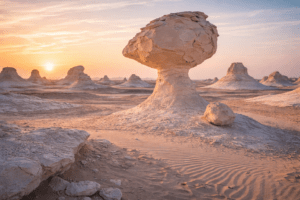
The White Desert National Park is the defining attraction of Bahariya Oasis.
Over thousands of years, wind and sand carved the soft chalk bedrock into strange shapes that resemble giant mushrooms, towers, animals, and abstract sculptures.
These formations create a landscape that feels almost unreal.
At sunrise and sunset, the desert light transforms the chalk formations into glowing shades of gold, pink, and orange. At night, the area becomes one of the best places in Egypt for stargazing, far from city lights.
Because the terrain is remote and fragile, visitors explore the White Desert with experienced 4×4 desert guides.
For many travelers, camping overnight among these formations becomes one of the most unforgettable moments of their entire Egypt trip.
A Bahariya Oasis Experience: What a Day in the Desert Feels Like
Morning in Bahariya usually begins early.
The desert air is cool, and sunlight slowly spreads across the dunes and volcanic hills. Guides prepare breakfast while the landscape turns from soft blue tones to warm golden colors.
After breakfast, travelers continue deeper into the desert by 4×4 vehicle, exploring rock formations, fossil fields, and hidden desert springs.
Midday often includes a break in shaded areas or near small oasis pockets where travelers can rest before continuing.
By late afternoon, the desert light begins to soften.
Guides often choose a scenic location for sunset — usually a high dune or an open area among the chalk formations of the White Desert. The sky turns orange and purple while the surrounding desert becomes silent.
Evening in the desert is simple but memorable: a warm meal cooked over a fire, tea under the stars, and the quiet atmosphere of the Sahara stretching endlessly in every direction.
How Many Days to Spend in Bahariya Oasis
Because Bahariya Oasis sits several hours from Cairo and serves as the gateway to the White Desert, the amount of time you spend there can significantly shape your experience. Some travelers visit briefly as part of a desert excursion, while others stay longer to explore the oasis and surrounding landscapes more deeply.
Choosing the right length of stay depends on whether your focus is quick desert exploration or a more immersive Sahara experience.
Minimum Visit: 1 Night / 2 Days
For travelers with limited time, the most common option is a 1-night, 2-day desert safari from Cairo.
In this itinerary, visitors typically depart Cairo early in the morning and arrive in Bahariya Oasis around midday. After a short break in the village, the journey continues immediately into the desert.
During the safari, travelers usually explore:
- The volcanic hills of the Black Desert
- The sparkling ridge of Crystal Mountain
- Several formations within White Desert National Park
The highlight of the trip is an overnight desert camp, where visitors watch sunset among the chalk formations and spend the night under the stars.
The following morning usually includes sunrise in the White Desert before returning to Bahariya and driving back to Cairo.
This short itinerary allows travelers to experience the essential landscapes of the region, but it moves quickly and leaves little time to explore the oasis itself.
Ideal Stay: 2 Nights / 3 Days
For a more relaxed and rewarding experience, many travelers prefer staying two nights in the Bahariya region.
This schedule allows visitors to explore both the oasis and the surrounding desert without rushing.
A typical two-night stay might include:
Day 1
Arrival from Cairo
Exploring the oasis village
Visit the Valley of the Golden Mummies
Relaxation at a natural hot spring
Day 2
Full White Desert safari
Exploration of the Black Desert and Crystal Mountain
Sunset among the chalk formations
Overnight desert camping
Day 3
Sunrise in the White Desert
Return to Bahariya Oasis
Relaxation before traveling back to Cairo
With this additional time, travelers can enjoy the desert landscapes while also experiencing daily life in the oasis.
Extended Desert Experience: 3 Nights or More
Some travelers choose to spend even longer in Bahariya, especially those interested in photography, geology, or extended desert exploration.
With three or more nights, it becomes possible to:
- Visit additional fossil fields and desert formations
- Explore deeper sections of the Great Sand Sea
- Spend more time in the oasis villages and palm groves
- Experience multiple sunrises and sunsets in the desert
Because desert landscapes change dramatically with light, photographers often appreciate the extra time to capture the White Desert at different times of day.
The Key Planning Insight
While it is possible to see the White Desert quickly, Bahariya Oasis rewards travelers who allow time to slow down.
The desert environment is best experienced at sunrise, sunset, and night, when temperatures are cooler and the landscape becomes more dramatic.
For most visitors, a two-night itinerary provides the best balance between convenience and immersion in one of Egypt’s most remarkable desert regions.
Best Time to Visit Bahariya Oasis
Bahariya Oasis sits deep within Egypt’s Western Desert, which means the climate is dry, sunny, and strongly seasonal. Because most activities involve exploring open desert landscapes, the time of year you visit can have a major impact on comfort and overall experience.
Understanding the seasonal conditions helps travelers plan a trip that maximizes time outdoors while avoiding the extreme heat that the Sahara can produce during summer.
Winter (November – February): The Most Comfortable Season
Winter is generally considered the best time to visit Bahariya Oasis.
During these months, daytime temperatures are usually mild, often ranging between 18°C and 25°C (64–77°F). These conditions make it comfortable to explore the desert, climb volcanic hills in the Black Desert, and spend time walking among the chalk formations of the White Desert.
Winter is also ideal for overnight desert camping, because the cooler air creates a comfortable environment for sleeping under the stars. Nights can become quite chilly, however, so a light jacket or warm layer is recommended.
Because of the pleasant temperatures, winter is the most popular season for desert safaris.
Spring (March – April): Warm but Still Pleasant
Spring remains a good time to visit Bahariya, especially during the earlier part of the season.
Temperatures begin to rise, but the desert is still manageable for outdoor activities. The landscape is particularly beautiful in spring because clear skies and stable weather conditions create excellent visibility across the desert.
However, travelers should be aware that khamsin winds — hot desert winds that can carry sand and dust — sometimes occur during this period. While they usually last only a short time, they can temporarily affect visibility.
Summer (May – September): Extremely Hot Conditions
Summer in the Western Desert can be intensely hot, with daytime temperatures often exceeding 40°C (104°F).
Because of this extreme heat, most travelers avoid visiting Bahariya during the peak summer months. Desert excursions during the day can become uncomfortable and sometimes unsafe without proper precautions.
However, some visitors still travel during summer because tourism is quieter and accommodation prices may be lower. Activities during this season are usually scheduled early in the morning or late in the afternoon to avoid the hottest part of the day.
Autumn (October): A Great Time to Visit
Autumn marks the transition from summer heat back to more comfortable conditions.
By October, temperatures begin to fall, making desert exploration enjoyable again. The skies remain clear, and the desert landscapes regain the crisp visibility that makes the region so striking.
For many travelers, October offers an excellent balance between pleasant weather and fewer crowds.
The Ideal Travel Window
For most visitors, the ideal time to visit Bahariya Oasis is between October and April.
During these months, temperatures allow for comfortable desert exploration, sunset viewing, and overnight camping experiences in the White Desert.
Because much of the Bahariya experience revolves around being outdoors — climbing hills, exploring rock formations, and traveling through the Sahara — planning your visit during cooler months will make the journey far more enjoyable.
How to Get to Bahariya Oasis
Reaching Bahariya Oasis is relatively straightforward compared with many other desert destinations in Egypt. Because it lies only a few hours from Cairo, Bahariya has become the most accessible gateway to Egypt’s Western Desert and the starting point for most White Desert expeditions.
Although the oasis feels remote once you arrive, the journey from the capital is manageable and well-traveled by both independent visitors and organized tours.
From Cairo
The vast majority of travelers reach Bahariya Oasis by road from Cairo.
The distance is approximately 370 kilometers (230 miles), and the journey typically takes 4–5 hours, depending on traffic and rest stops.
The route leaves Cairo heading southwest into the desert, gradually leaving the Nile Valley’s farmland behind and entering the open landscapes of Egypt’s Western Desert.
There are several ways to make this trip:
Private Car or Driver
Hiring a private driver is one of the most comfortable ways to reach Bahariya. Many travelers choose this option because it allows flexibility in departure time and stops along the way.
Organized Desert Tours
Many visitors travel to Bahariya as part of guided desert tours departing from Cairo. These tours usually include transportation, accommodation, desert safaris, and camping equipment.
This is the most common option for travelers planning to explore the White Desert, since the safari portion of the trip requires experienced desert guides and specialized vehicles.
Public Bus
Limited bus services connect Cairo with Bahariya Oasis. While this option is cheaper, schedules can be less predictable and the journey less comfortable than private transport.
From Marsa Matruh or the Mediterranean Coast
Although less common, Bahariya can also be reached from Egypt’s Mediterranean coast, particularly from Marsa Matruh.
However, this route involves longer desert drives and is rarely used by first-time visitors. Most travelers visit Bahariya directly from Cairo.
Why Most Travelers Use Desert Guides
Once travelers reach Bahariya Oasis, exploration beyond the village requires four-wheel-drive vehicles and experienced guides.
The routes leading to the Black Desert, Crystal Mountain, and White Desert cross remote desert terrain with no clear roads or signage. Local desert guides know how to navigate these landscapes safely while avoiding fragile geological areas.
For this reason, even independent travelers typically join guided desert safaris once they arrive in Bahariya.
The Journey as Part of the Experience
The drive to Bahariya is more than just transportation — it marks the transition from Egypt’s populated heartland into the vast emptiness of the Sahara.
As the road leaves Cairo behind, cities gradually disappear, farmland fades, and the desert horizon begins to dominate the landscape.
By the time the oasis appears — palm trees rising unexpectedly from the desert floor — travelers understand why Bahariya has long been considered the gateway to Egypt’s most extraordinary desert landscapes.
Bahariya vs Siwa vs Fayoum: Which Oasis Should You Visit?
Egypt’s Western Desert contains several remarkable oasis regions, but Bahariya, Siwa, and Fayoum each offer a very different travel experience. Choosing between them depends on how much time you have, how far you are willing to travel, and what type of landscape or atmosphere you want to experience.
Although all three destinations sit within desert environments, they vary dramatically in accessibility, scenery, culture, and overall travel style.
Bahariya Oasis: The Gateway to the White Desert
Bahariya Oasis is best known as the launch point for desert expeditions into the Black Desert and the White Desert. Travelers usually come here specifically to explore these surreal landscapes and experience overnight camping in the Sahara.
Because Bahariya lies about 4–5 hours from Cairo, it is the most practical oasis for short desert adventures. Many visitors travel here for a two-day or three-day safari, making it a popular choice for travelers who want a taste of the Sahara without committing to a long desert journey.
Bahariya’s appeal is largely geological. Volcanic hills, fossil fields, and the sculpted chalk formations of the White Desert create landscapes that feel almost otherworldly.
Travelers who love dramatic desert scenery, photography, or adventure-style travel usually find Bahariya the most exciting of the three.
Siwa Oasis: Egypt’s Most Remote and Immersive Oasis
Siwa Oasis is the most remote and culturally distinct oasis in Egypt.
Located near the Libyan border, Siwa requires a much longer journey — typically 8 to 10 hours from Cairo by road. That distance has helped preserve its unique identity. The oasis has its own language, architectural traditions, and cultural rhythms that differ noticeably from the Nile Valley.
Siwa is known for its palm groves, salt lakes, mudbrick fortresses, and desert dunes. It also holds one of the most famous historical sites in the desert: the Temple of the Oracle of Amun, where Alexander the Great is believed to have sought divine confirmation of his rule.
Travelers who visit Siwa often stay three to four nights or longer, allowing time to explore the oasis slowly, experience desert safaris in the Great Sand Sea, and enjoy the calm atmosphere that defines the region.
If Bahariya is about dramatic landscapes, Siwa is about culture, isolation, and immersion.
Fayoum Oasis: Egypt’s Easiest Desert Escape
Fayoum Oasis is the closest oasis to Cairo and feels very different from the deeper desert destinations.
Located about two hours from the capital, Fayoum is often visited as a day trip or weekend escape. Instead of vast Sahara landscapes, Fayoum is defined by a unique combination of desert, farmland, and lakes.
The region includes Wadi El Rayan waterfalls, Lake Qarun, fossil fields in Wadi Al-Hitan (Valley of the Whales), and sand dunes used for desert activities.
Because of its proximity to Cairo, Fayoum feels more accessible and less remote than Bahariya or Siwa. Visitors come here for nature, birdlife, desert scenery, and relaxed countryside experiences rather than long desert expeditions.
Which Oasis Is Right for Your Trip?
Each oasis offers something valuable, but they serve different roles in an Egypt itinerary.
Choose Bahariya if you want:
- The White Desert and surreal rock formations
- A classic Sahara desert safari
- An overnight camping experience under the stars
- A relatively short trip from Cairo
Choose Siwa if you want:
- The most remote oasis experience in Egypt
- Unique local culture and traditions
- Salt lakes, palm forests, and desert dunes
- A slower, more immersive desert journey
Choose Fayoum if you want:
- An easy nature escape from Cairo
- Lakes, waterfalls, and fossil landscapes
- A relaxed day trip or short overnight stay
- A mix of desert scenery and rural countryside
Many Travelers Combine Them
Travelers with enough time often combine more than one oasis in their itinerary.
A typical sequence might include:
- Fayoum as a short nature escape from Cairo
- Bahariya for a White Desert expedition
- Siwa for a deeper and more remote oasis experience
Together, these destinations reveal a completely different side of Egypt — one defined not by pyramids and temples, but by desert horizons, palm groves, and the quiet beauty of the Sahara.
What to Pack for Bahariya Oasis and the White Desert
Packing for Bahariya Oasis is slightly different from packing for Egypt’s cities or coastal destinations. Much of the experience here takes place outdoors in the desert, often far from shops or modern infrastructure. Preparing properly will make desert exploration, safaris, and overnight camping far more comfortable.
The key is to pack for sun exposure during the day and cooler temperatures at night, especially if you plan to camp in the White Desert.
Lightweight, Breathable Clothing
Daytime desert temperatures can be warm even during the cooler months. Loose, breathable clothing made from cotton or linen helps keep you comfortable while protecting your skin from the sun.
Long sleeves and lightweight pants are often better than shorts and tank tops because they provide protection from both sunburn and desert wind.
Neutral colors also help reflect heat and blend with the environment.
Comfortable Walking Shoes
Much of the exploration around Bahariya and the White Desert involves walking on sand, rock formations, and uneven terrain. Comfortable walking shoes or lightweight hiking shoes are ideal.
Closed shoes are generally better than sandals during desert excursions because they keep sand out and provide more stability when climbing hills or rocks.
Sun Protection
The desert sun can be intense even in cooler seasons, so sun protection is essential.
Important items include:
- Sunglasses with UV protection
- A wide-brim hat or cap
- High-SPF sunscreen
- Lip balm with sun protection
Because shade is limited in many desert areas, these items quickly become some of the most valuable things in your bag.
A Warm Layer for Desert Nights
One thing that surprises many visitors is how quickly desert temperatures drop after sunset.
Even when daytime weather is warm, nights in the desert can become quite cool, particularly between November and February.
Packing a light jacket, fleece, or sweater ensures you remain comfortable during evening campfires or early morning desert sunrises.
A Scarf or Shawl
A lightweight scarf can be extremely useful in desert environments. It can help protect your face from wind or blowing sand and also provide additional sun protection during the day.
Scarves are also helpful for keeping warm during cool desert evenings.
Small Backpack or Day Bag
During desert excursions, it is helpful to carry a small backpack with essentials such as water, sunscreen, and a camera.
Because most desert safaris involve multiple stops across the landscape, having easy access to these items makes the experience more enjoyable.
Camera or Smartphone for Photography
The landscapes surrounding Bahariya — particularly the formations in the White Desert — are among the most photogenic environments in Egypt.
Sunrise and sunset lighting create dramatic colors and shadows across the chalk formations, making photography especially rewarding.
Travelers interested in stargazing or night photography may also want to bring a tripod for capturing the desert sky.
What Your Guide Will Usually Provide
If you are joining a desert safari or overnight camping tour, most guides will provide the major equipment needed for the experience, including:
- Tents or sleeping arrangements
- Blankets or sleeping mats
- Meals prepared at camp
- Transportation by 4×4 vehicle
Because these essentials are usually included, visitors only need to pack personal clothing and small travel items.
The Goal: Travel Light but Smart
Bahariya Oasis is a destination where simplicity works best. The desert environment rewards travelers who pack lightly but thoughtfully, focusing on comfort, sun protection, and the ability to adapt to changing temperatures.
With the right preparation, exploring the landscapes around Bahariya becomes far more enjoyable — allowing you to focus on the remarkable scenery and quiet atmosphere of Egypt’s Western Desert.
FAQ: Bahariya Oasis
Is Bahariya Oasis worth visiting?
Yes, Bahariya Oasis is widely considered one of the best destinations in Egypt for travelers interested in desert landscapes and Sahara exploration. The oasis serves as the main gateway to the White Desert and Black Desert, two of the most visually dramatic environments in Egypt.
Visitors typically come to Bahariya to experience overnight desert safaris, explore volcanic hills and chalk rock formations, and enjoy the quiet atmosphere of Egypt’s Western Desert. The oasis itself also has interesting historical sites, including the Valley of the Golden Mummies and ancient temple remains.
For travelers who want to experience a side of Egypt beyond pyramids and temples, Bahariya offers a completely different landscape — one defined by desert horizons, fossil fields, and star-filled night skies.
How far is Bahariya Oasis from Cairo?
Bahariya Oasis is located about 370 kilometers (230 miles) southwest of Cairo. The drive usually takes 4 to 5 hours, depending on traffic and rest stops.
The journey begins by leaving the Nile Valley and gradually entering the open landscapes of Egypt’s Western Desert. As the road continues deeper into the desert, the scenery becomes increasingly sparse until palm trees and farms begin to appear again around the oasis.
Most travelers reach Bahariya by private car, organized desert tour, or shared transport arranged by tour companies. Because the White Desert and surrounding areas require specialized vehicles and experienced guides, many visitors travel as part of guided desert safari trips departing from Cairo.
Can you visit the White Desert without a guide?
No, independent travel into the White Desert is generally not possible and is not recommended.
The White Desert lies deep within protected desert terrain where there are no marked roads, navigation signs, or services. Travel across this landscape requires 4×4 vehicles and experienced desert guides who understand the routes and safety conditions.
Most visitors explore the White Desert through organized safaris departing from Bahariya Oasis. These tours typically include transportation, desert navigation, meals, camping equipment, and experienced guides who know how to move safely through the terrain.
Because the area is remote and environmentally fragile, guided tours also help protect the unique geological formations and ensure visitors experience the desert responsibly.
Is the White Desert safe for travelers?
Yes, the White Desert is considered safe for travelers when visited with licensed guides and organized desert safari operators.
Tour companies operating in Bahariya are experienced in navigating the desert terrain and typically use reliable four-wheel-drive vehicles designed for sand and rocky environments. Guides also monitor weather conditions and know how to handle the remote environment safely.
Because the desert lacks infrastructure, attempting to travel independently can be risky. Joining an established tour ensures that visitors have proper vehicles, experienced drivers, and access to food, water, and camping equipment.
When planned with reputable guides, exploring the White Desert is one of the most memorable and safe adventure experiences available in Egypt.
Can you camp in the White Desert?
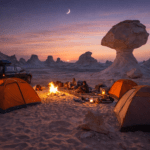
Yes. Overnight camping in the White Desert is one of the most popular and unforgettable experiences in the Bahariya region.
Most desert safaris include a night spent camping among the chalk rock formations inside White Desert National Park. Guides typically prepare a simple desert camp that includes sleeping mats or tents, blankets, and a freshly cooked dinner around a campfire.
Camping allows travelers to experience the desert at its most beautiful moments — sunset, stargazing, and sunrise over the surreal white formations. With almost no light pollution in the area, the night sky in the White Desert can be spectacular.
For many visitors, this overnight desert experience becomes the highlight of their trip to Egypt.
What is Bahariya Oasis known for?
Bahariya Oasis is best known as the gateway to some of Egypt’s most extraordinary desert landscapes, particularly the White Desert and the Black Desert. These environments feature dramatic geological formations, volcanic hills, fossil fields, and vast sand plains that feel completely different from Egypt’s Nile Valley.
The oasis is also historically significant. Archaeological discoveries such as the Valley of the Golden Mummies revealed hundreds of Greco-Roman era burials, making Bahariya one of the most important archaeological areas in Egypt’s Western Desert.
Today, Bahariya is primarily known for desert safaris, overnight camping in the White Desert, hot springs, and exploration of the surrounding Sahara landscapes. Travelers who visit often come seeking a quiet desert experience far removed from Egypt’s busy cities.
When is the best time to visit Bahariya Oasis?
The best time to visit Bahariya Oasis is between October and April, when temperatures are cooler and more comfortable for exploring the desert.
During these months, daytime temperatures are generally mild, making it easier to visit sites such as the Black Desert, Crystal Mountain, and White Desert National Park. Winter is particularly popular because the cooler air creates ideal conditions for desert hiking, sunset viewing, and overnight camping.
Summer months from May through September can be extremely hot, with temperatures often exceeding 40°C (104°F). While travel is still possible during this time, most desert activities must be scheduled early in the morning or later in the evening to avoid the midday heat.
For most travelers, visiting during the cooler season makes the desert experience far more enjoyable.
How many days do you need in Bahariya Oasis?
Most travelers spend two to three days in Bahariya Oasis, which allows enough time to explore both the oasis and the surrounding desert landscapes.
A typical itinerary includes a drive from Cairo to Bahariya Oasis on the first day, followed by a desert safari into the Black Desert and White Desert, often including overnight camping under the stars. The following day usually includes sunrise in the White Desert before returning to Bahariya and traveling back to Cairo.
Travelers who want a slower experience may stay longer to visit local historical sites, relax in hot springs, and explore additional areas of the Sahara.
For visitors interested primarily in the White Desert, a two-day desert safari from Cairo via Bahariya is the most common option.
Final Thoughts: Why Bahariya Oasis Is One of Egypt’s Most Unique Destinations
Bahariya Oasis reveals a side of Egypt that many travelers never expect.
While the Nile Valley is defined by temples, pyramids, and ancient cities, the Western Desert offers a completely different landscape — one shaped by wind, time, and vast open space. In Bahariya, palm groves rise from the desert floor, volcanic hills break the horizon, and surreal white rock formations appear in the distance like sculptures carved by nature itself.
For travelers who venture here, the experience often becomes one of the most memorable parts of their journey through Egypt.
The region’s true highlight lies beyond the oasis in the surrounding Sahara. The Black Desert, Crystal Mountain, and especially the White Desert create landscapes that feel almost otherworldly. Spending a night camping beneath the stars, surrounded by silent desert formations, offers a rare sense of stillness that is difficult to find anywhere else in the country.
Bahariya is also one of the most accessible ways to experience the Sahara. Located only a few hours from Cairo, it allows visitors to explore Egypt’s desert environments without traveling deep into the remote western regions of the country.
For travelers seeking something beyond the traditional Egypt itinerary, Bahariya provides that contrast. After the crowds of Cairo or the monumental temples of Luxor, the desert offers space, quiet, and a completely different perspective on the country’s landscapes.
Plan Your Bahariya Oasis Desert Experience
If you’re interested in exploring Egypt’s Western Desert, Bahariya Oasis is the natural starting point.
From here, visitors can discover the volcanic hills of the Black Desert, hike among the chalk formations of the White Desert, visit ancient archaeological sites within the oasis, and experience unforgettable desert sunsets and star-filled skies.
Whether you are planning a White Desert safari from Cairo, a multi-day desert expedition, or a longer Egypt itinerary that includes several oasis regions, Bahariya offers one of the most distinctive adventures in the country.
Explore our Bahariya Oasis and White Desert tours to begin planning your desert journey.