Alexandria Egypt Tours: The Complete Travel Guide to Egypt’s Mediterranean Capital
Alexandria is Egypt’s Mediterranean chapter — a city where sea wind replaces desert heat, and where the story shifts from pharaohs to philosophers, empires, and libraries. Founded in 331 BC by Alexander the Great, Alexandria became one of the most influential cities in the ancient world. It was a capital, a port, a cultural crossroads, and a center of scholarship whose legacy still shapes how the world imagines ancient knowledge.
Today, Alexandria Egypt tours attract travelers who want more than pyramids and temples. Alexandria is about layers: Greco-Roman archaeology, Islamic fortifications, modern Egyptian coastal life, and a sense of intellectual history that feels different from anywhere else in the country. If you’re building an itinerary and asking whether Alexandria is worth visiting — especially as a day tour from Cairo — this guide gives you everything you need: what to see, how long to stay, what makes Alexandria unique, and how to plan the best visit.
Why Alexandria Is Different from the Rest of Egypt
Most first-time Egypt itineraries follow a familiar route: Cairo, Luxor, Aswan, then a Nile cruise or Red Sea extension. Those destinations focus heavily on ancient Egypt’s Pharaonic era. Alexandria is the exception. It belongs to Egypt’s Mediterranean identity and its Greco-Roman past.
Alexandria’s significance grew rapidly after its founding because it was designed to be a city of global influence. Under the Ptolemies, it became the capital of Egypt and a major hub for trade, diplomacy, and knowledge. Later, under Roman rule, it became one of the empire’s most important cities. Over centuries, it absorbed cultures and transformed repeatedly — which is exactly why it feels so layered today.
When you take Alexandria Egypt tours, you’re not just adding another city. You’re adding a completely different era of Egyptian history and a completely different atmosphere.
Alexandria’s Ancient Legacy: Library, Lighthouse, and Intellectual Power
No guide to Alexandria is complete without understanding the two legends that define it: the Great Library of Alexandria and the Lighthouse of Pharos.
The Library was not just a building; it was an idea — a bold attempt to gather the knowledge of the entire known world. Ancient sources describe the Library as a place where scholars debated mathematics, astronomy, geography, philosophy, and medicine. Whether every story is literal or not, the impact is undeniable: Alexandria became synonymous with scholarship.
The Lighthouse of Pharos, built around the 3rd century BC, became one of the Seven Wonders of the Ancient World. It was a symbol of engineering brilliance and a practical guide for ships entering one of the busiest harbors in the Mediterranean.
Both the Library and Lighthouse were eventually lost through centuries of political conflict, natural disasters, and decline. But their cultural legacy remained — and modern Alexandria intentionally echoes that identity.
This is why Alexandria is not simply a “nice coastal city.” It’s a place of historical gravity.
Top Things to Do in Alexandria Egypt
When people search for “things to do in Alexandria Egypt,” they usually want the classic highlights — and those highlights are worth it. The best Alexandria Egypt tours include a blend of Roman archaeology, coastal fortress views, and modern cultural landmarks.
Qaitbay Citadel: Built on the Site of the Lighthouse
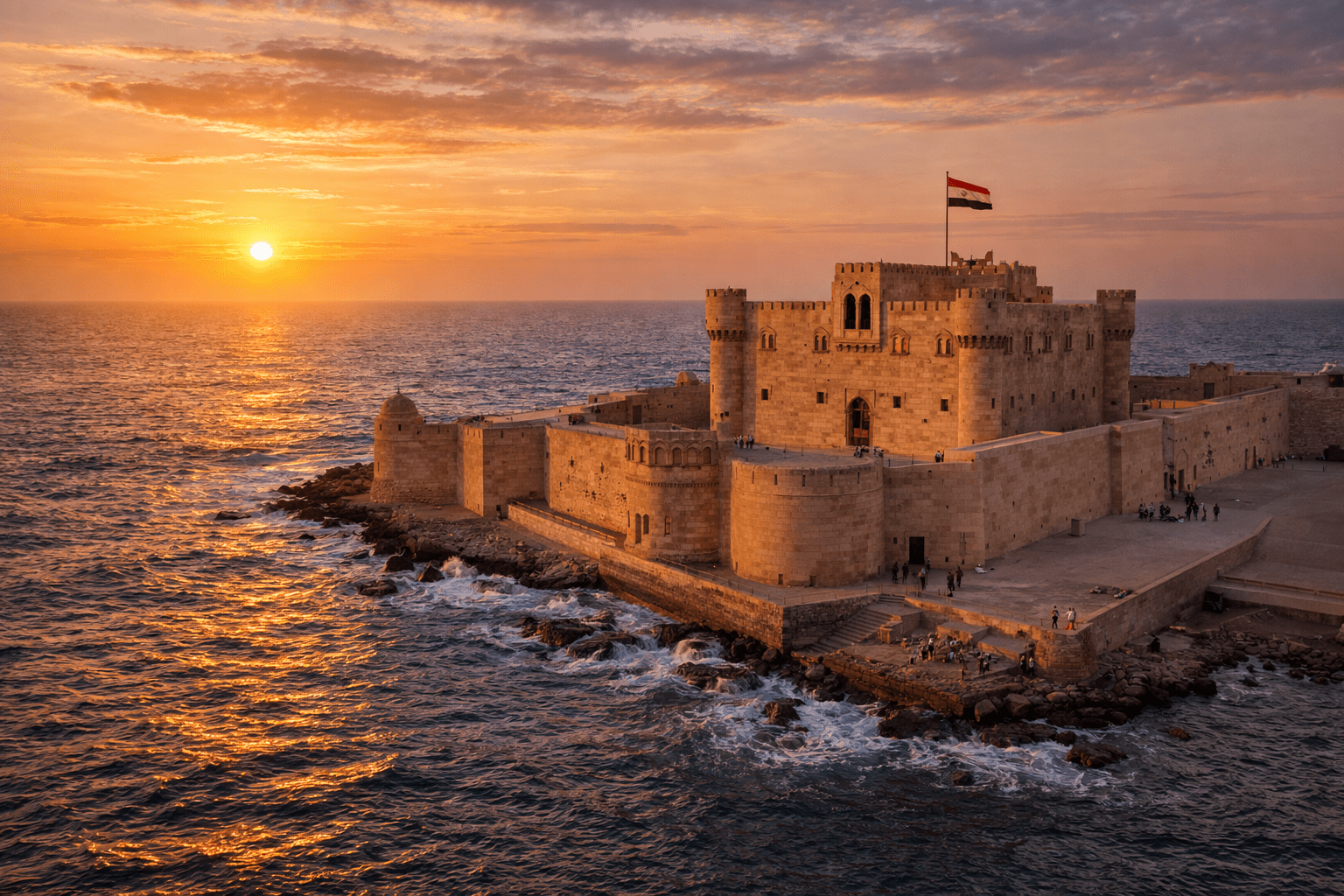
The Qaitbay Citadel (built in 1477 AD) sits at the edge of the harbor where the Lighthouse of Pharos once stood. For many travelers, this is the emotional center of Alexandria: the exact location where one of the ancient world’s greatest wonders guided ships into port.
The citadel itself is a strong example of Mamluk-era military architecture. Walking along its stone walls, you can feel the strategic importance of this coastline. The views across the Mediterranean are spectacular, and the experience is as much about atmosphere as history — wind, sea spray, and the sense that this shoreline has always mattered.
If you do only one major stop on an Alexandria day tour, make it Qaitbay.
Catacombs of Kom El Shoqafa: A Greco-Roman Underworld
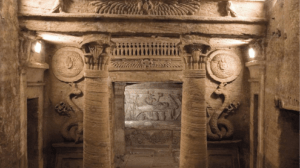
The Catacombs of Kom El Shoqafa date to around the 2nd century AD and are among the most unique archaeological sites in Egypt. Unlike tombs in Luxor that center Pharaonic beliefs, these catacombs reflect Alexandria’s mixed identity. Here you see Roman burial practices, Greek artistic forms, and Egyptian symbols — sometimes combined in ways that feel surreal.
Descending into the chambers, visitors often notice how the space tells a story of cultural blending. Alexandria was not one civilization. It was many civilizations living in the same city. The catacombs make that visible.
Pompey’s Pillar and the Serapeum
Despite its popular name, Pompey’s Pillar has nothing to do with Pompey. It was erected in 297 AD in honor of Emperor Diocletian. The column is monumental, and the surrounding area hints at the once-great Serapeum complex — dedicated to Serapis, a Greco-Egyptian deity reflecting Alexandria’s religious fusion.
This stop is valuable because it anchors Alexandria in the Roman imperial period — an era when the city was one of the Mediterranean’s major power centers.
Bibliotheca Alexandrina: Modern Alexandria’s Tribute to Knowledge
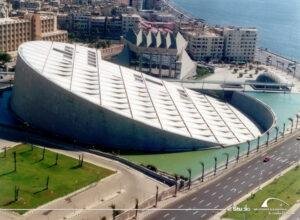
The Bibliotheca Alexandrina, opened in 2002, is a modern cultural institution inspired by the ancient Library. Its architecture is striking, its setting near the sea feels intentional, and its role is symbolic: Alexandria reclaiming its identity as a city of learning.
Even if you’re not a “museum person,” this stop works well because it connects the ancient idea of Alexandria’s scholarship to a modern experience. It also adds variety to a day that otherwise focuses heavily on ruins and stone.
Alexandria Day Tour from Cairo: Is It Worth It?
This is one of the most searched questions: “Is an Alexandria day tour from Cairo worth it?” For most travelers, yes — if it’s done properly.
Alexandria is roughly 2.5–3 hours from Cairo by car (traffic depending). That distance is manageable for a long day trip. The key is organization: leave early, follow a tight route, and avoid wasting time zig-zagging across the city.
If you’re already spending several days in Cairo seeing the pyramids and museums, Alexandria adds a different historical layer without requiring a complete itinerary overhaul. It’s one of the best “contrast” days you can add to an Egypt trip: desert to sea, pharaohs to philosophers.

Who Should Do It as a Day Trip
A day trip is ideal if you:
- Are based in Cairo and don’t want to change hotels
- Want Roman and Mediterranean history in your itinerary
- Prefer a structured visit rather than wandering independently
- Want a break from Cairo’s intensity
Who Should Stay Overnight
Overnight makes sense if you:
- Love coastal cities and want a slower pace
- Want sunset and evening atmosphere on the Corniche
- Want to explore beyond the major highlights
- Enjoy food culture (Alexandria’s seafood scene is strong)
One Day vs Two Days in Alexandria: What Changes?
A single day covers the essentials. Two days lets you experience Alexandria as a living coastal city, not just a checklist of landmarks.
What a Great 1-Day Plan Looks Like
A good 1-day Alexandria itinerary is not just “stuff.” It’s flow: underground history first (catacombs), coastal fortress next (Qaitbay), cultural landmark later (library), then time for the sea and the city.
A well-paced day often feels surprisingly complete — Alexandria’s highlights are strong and distinct.
What 2 Days Unlock
With an overnight, you can add breathing room:
- More Corniche time and a relaxed harbor meal
- Optional stops like gardens or additional museums
- Less pressure to rush through sites
- A more “vacation” feel instead of “day trip sprint”
If you’re building a premium itinerary, two days helps Alexandria shine.
Best Time to Visit Alexandria Egypt
Alexandria has a Mediterranean climate, which makes it easier year-round than Upper Egypt. Summers can be warm and humid, but sea breezes help. Winters are mild, sometimes windy, but generally comfortable for sightseeing.
The most comfortable months are typically:
- March to June
- September to November
If your Egypt itinerary includes Luxor and Aswan, Alexandria can feel refreshingly cool by comparison, especially in hotter months.
Alexandria vs Cairo: What You Actually Get in Each City
A lot of travelers make the mistake of expecting Alexandria to “feel like Cairo but by the sea.” It doesn’t.
Cairo is dramatic, busy, and Pharaonic in its main attractions. It’s the pyramids, museums, Islamic architecture, and nonstop energy.
Alexandria is more subtle. Its historical power comes from intellectual identity and cultural layering. The story is Greco-Roman, not Pharaonic. The atmosphere is coastal, not desert.
You don’t choose one instead of the other — you combine them for a fuller story of Egypt.
What to Eat and How Alexandria Feels
Alexandria is one of Egypt’s best cities for seafood. The culture around harbor dining, grilled fish, and Mediterranean flavors adds a “coastal lifestyle” feeling that Cairo doesn’t have. Even if you’re only there for a day, building in a sea-view lunch changes the experience: it turns the tour into a memory rather than a rushed route.
The Corniche is where Alexandria becomes real. You feel the city’s pace. You see local life. You understand why Alexandria has a different identity than the rest of Egypt.
Why Book Guided Alexandria Egypt Tours?
You can visit Alexandria independently, but a guided tour often makes the day smoother and more meaningful.
Alexandria’s sites are spread out. Without planning, you can lose hours to traffic and inefficient routing. And many Greco-Roman sites don’t “explain themselves.” A guide adds context that transforms what would otherwise feel like “just ruins.”
If your main goal is to understand Alexandria’s story — not just see its landmarks — guided Alexandria Egypt tours are the stronger option.
Frequently Asked Questions
Is Alexandria safe for tourists?
Yes. Alexandria is a major Egyptian city with regular tourism activity. A guided tour also adds comfort and efficiency.
Can I do Alexandria in one day from Cairo?
Yes. It’s one of the most common itinerary add-ons. The key is leaving early and keeping a structured route.
Is Alexandria worth it if I’m already doing Luxor and Aswan?
Yes — because Alexandria covers a different era. Luxor and Aswan are Pharaonic; Alexandria is Greco-Roman and Mediterranean.
What is Alexandria most famous for?
Historically: the Lighthouse of Pharos and the Great Library. Today: Qaitbay Citadel, Roman catacombs, and its Mediterranean culture.
Final Take: What Alexandria Adds to Your Egypt Trip
Alexandria is the chapter that completes Egypt’s story.
It’s where Egypt becomes Mediterranean. Where Greek and Roman influence becomes visible. Where knowledge, trade, and culture converge. It’s not just “another stop.” It’s an entirely different theme — and that theme makes your itinerary richer.
If you want your trip to include more than pyramids and temples — if you want Egypt’s global history, its intellectual legacy, and its coastal identity — Alexandria belongs in your plan.
That’s why Alexandria Egypt tours are one of the best additions you can make to a Cairo-based itinerary.
Planning to explore the Mediterranean side of Egypt? Discover our curated Alexandria Egypt tours designed to cover Qaitbay Citadel, the Roman Catacombs, and the city’s most iconic highlights in one seamless experience. You can also explore more about the city on our Alexandria destination page to build the perfect itinerary.