El Lahun Pyramid & Kahun: Senusret II’s Lost Town Near Fayoum
Most visitors who want to see Egyptian pyramids head for Giza, Saqqara or Dahshur. Farther south, near the entrance to Fayoum, stands a pyramid that looks quite different from those familiar monuments.
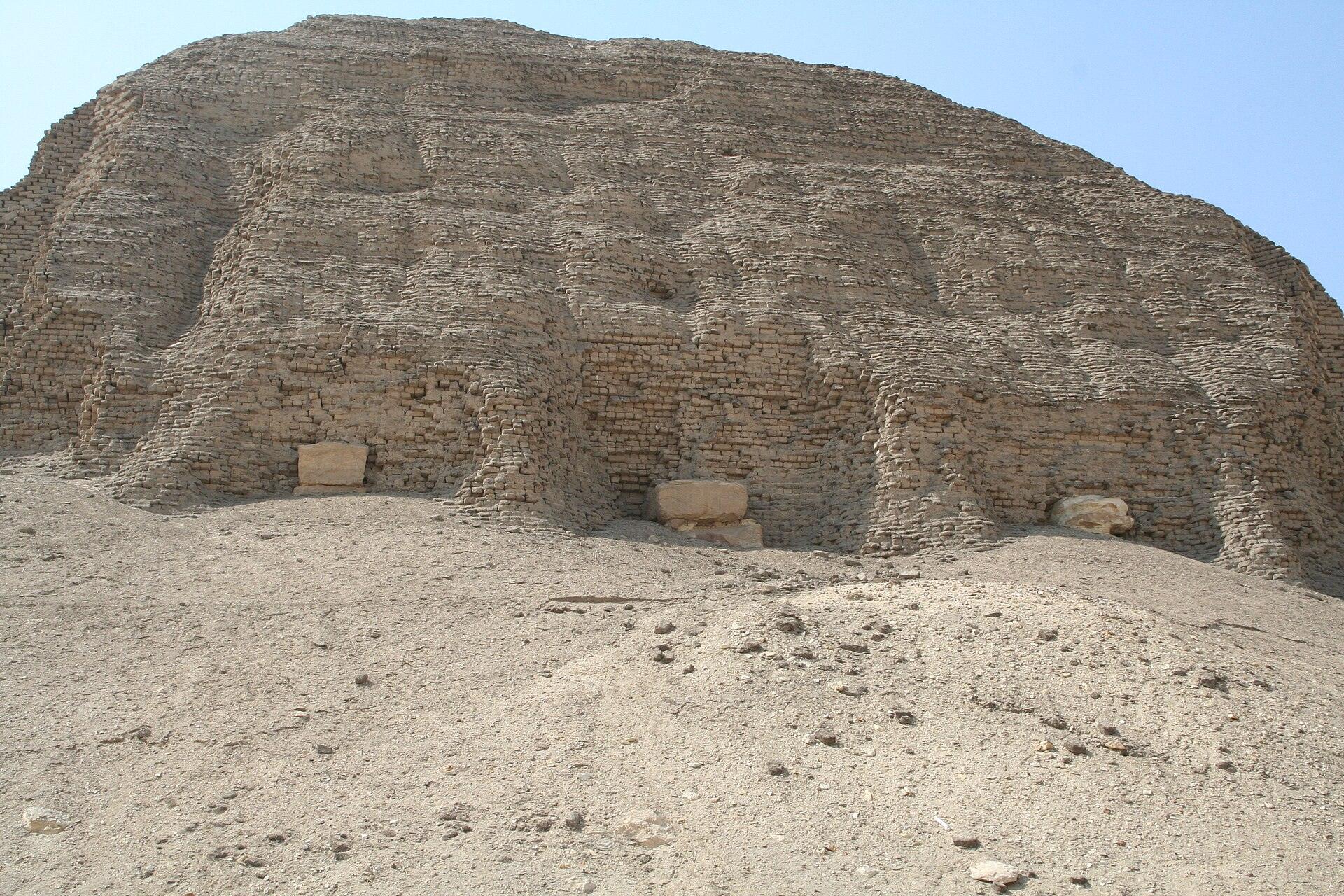
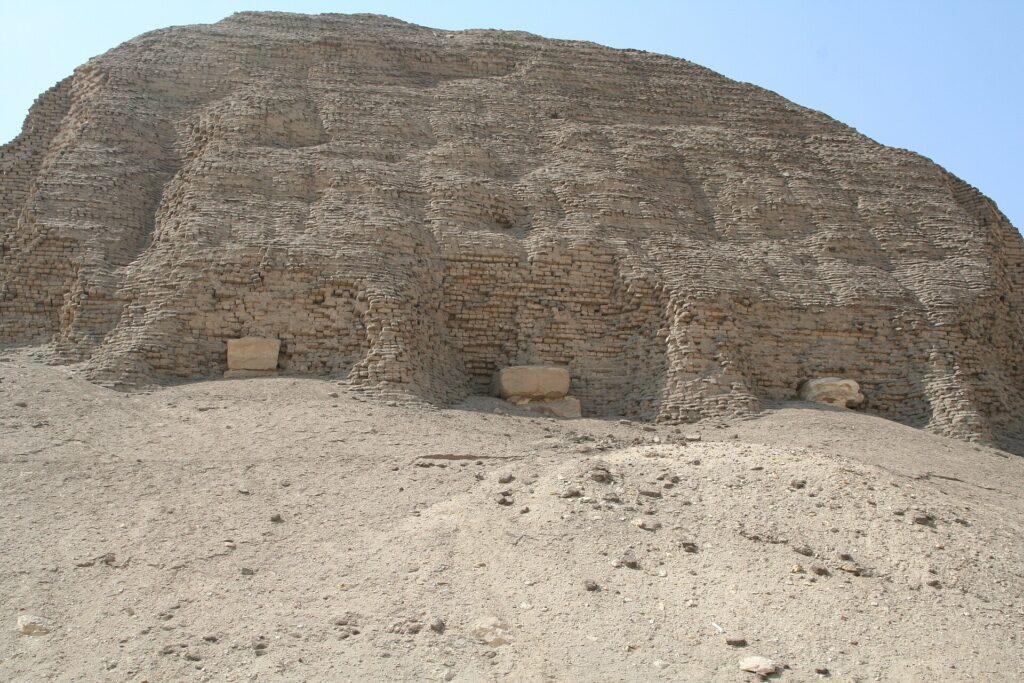
The Pyramid of Senusret II at El Lahun has lost its original limestone casing, leaving much of its mudbrick construction exposed. Nearly 4,000 years of erosion have turned what was once a carefully finished royal monument into a broad, uneven mound. From a distance, you might not immediately recognize it as a pyramid.
Not far from the pyramid are the remains of Kahun, a planned Middle Kingdom town where archaeologists uncovered houses, household objects and an extraordinary collection of written records.
Among the discoveries were complaints about work assignments, accounts of supplies and medical texts dealing with women’s health. They offer a remarkably personal glimpse into a community that existed nearly 4,000 years ago.
El Lahun is worth visiting if you’re interested in Middle Kingdom history, pyramid construction or the people who lived around Egypt’s royal monuments. If your main goal is to see the country’s most impressive pyramids, Giza, Saqqara and Dahshur should come first.
Where Is El Lahun Pyramid?
El Lahun lies southwest of Cairo, near the southeastern entrance to Fayoum. The pyramid stands close to the boundary between cultivated land and desert, where the Nile Valley opens toward the Fayoum Depression.
This position was important during the Middle Kingdom. The rulers of the Twelfth Dynasty had strong connections with Fayoum, and Senusret II chose to establish his burial complex near the region’s entrance.
The names can be confusing. You’ll encounter El Lahun, Lahun, Illahun and Kahun in archaeological publications, maps and travel information.
El Lahun generally refers to the locality and pyramid complex. Kahun is the name commonly used for the nearby ancient settlement, following the terminology adopted by nineteenth-century archaeologist Flinders Petrie.
The ancient town was probably called Hetep-Senusret, a name associated with Senusret II and usually translated as “Senusret is satisfied.”
The pyramid complex and town were closely connected, but they were separate parts of a larger royal landscape.
Who Was Senusret II?
Senusret II ruled Egypt during the Twelfth Dynasty, in the Middle Kingdom, around the nineteenth century BCE.
The Middle Kingdom receives less attention from international visitors than the age of the Giza pyramids or the New Kingdom pharaohs buried in the Valley of the Kings. Yet it was a period of considerable achievement in government, literature, agriculture and architecture.
Senusret II is particularly associated with Fayoum, where royal interest in agricultural resources and regional administration was becoming increasingly important. His decision to build at El Lahun placed his pyramid near a strategically valuable entrance to the region.
By his reign, Egyptian pyramid building had changed considerably from the Fourth Dynasty. The enormous stone pyramids of Giza were centuries old, and royal architects were using different combinations of stone, mudbrick and natural terrain.
El Lahun is one of the clearest surviving examples of those Middle Kingdom construction methods.
Why Does El Lahun Pyramid Look So Different From Giza?
Senusret II’s pyramid was originally covered with white limestone, giving it a finished exterior that would have looked very different from the weathered mound visitors see today.
Inside, the builders incorporated a natural limestone outcrop into the core. Limestone walls strengthened the structure, while mudbrick filled much of the framework beneath the outer casing.
This method reduced the amount of quarried stone required for the pyramid’s main body, although the project still demanded substantial engineering and organization.
Over the centuries, the outer limestone disappeared. Once the mudbrick was exposed, erosion gradually changed the pyramid’s shape.
If you’ve visited Giza, the contrast is striking. Khufu’s pyramid retains a massive stone core, while Senusret II’s monument shows what happens when a pyramid built largely with mudbrick loses its protective exterior.
For a broader look at how pyramid design developed, our Saqqara and Dahshur guide follows the architectural changes from Djoser’s Step Pyramid through Sneferu’s Bent and Red Pyramids.
Can You Go Inside Senusret II’s Pyramid?
Senusret II’s pyramid was officially opened to visitors in June 2019 following conservation and restoration work.
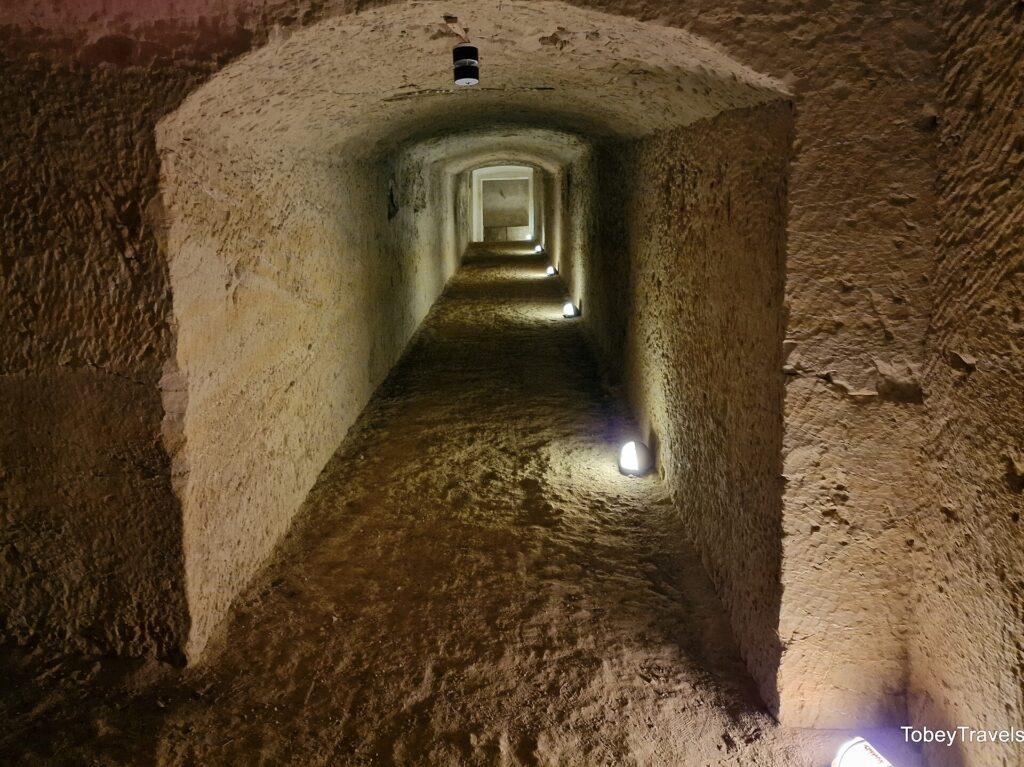
Its internal arrangement is unusual. Unlike many earlier royal pyramids, which had entrances on their northern sides, Senusret II’s pyramid was entered through a system of shafts on its southern side, outside the pyramid’s main body.
Egypt’s Ministry of Tourism and Antiquities identifies two southern entrances.
The entrance arrangement made the pyramid particularly difficult to investigate. Earlier royal pyramids generally had entrances on the northern side, but Senusret II’s burial passages were reached through shafts to the south, outside the main pyramid structure.
The underground passages lead to a burial chamber containing a large granite sarcophagus.
Modern restoration work helped make the interior accessible to visitors, including improvements to the passages and lighting.
However, the 2019 reopening doesn’t guarantee unrestricted entry today. Conservation requirements and local arrangements can change, so confirm that the interior is open before making the journey.
The Royal Burial Complex Beyond the Pyramid
Senusret II’s pyramid formed part of a larger funerary complex that included temples, associated burial structures and a cemetery used by members of the royal family and elite.
One of the most important discoveries from the area was the jewelry of Princess Sithathoryunet, also written Sat-Hathor-Iunet.
In 1914, excavators discovered an extraordinary collection of jewelry in a concealed niche within her tomb near Senusret II’s pyramid.
The ornaments included gold necklaces, bracelets and finely worked pieces set with colorful stones. Many are now in the Metropolitan Museum of Art in New York, while other pieces are held in Cairo.
Among the most striking pieces is a finely worked pectoral bearing the name of Senusret II, decorated with gold and colorful stone inlays. It is now in the Metropolitan Museum of Art’s collection.
Around the pyramid are fragmentary remains of the original royal complex, although little survives of the temples and associated buildings.

Kahun: The Planned Town Beside the Pyramid
A short distance from the pyramid lies the archaeological site of the settlement commonly known as Kahun.
The town developed in connection with Senusret II’s pyramid complex, but it was much more than accommodation for the people who built it.
Its residents included people involved in administration, religious services and practical work connected with the royal establishment, along with their households.
Kahun is frequently described as a pyramid workers’ town, but that label gives an incomplete picture of its purpose.
The settlement was not merely a temporary camp occupied during construction. Documents recovered from the site include records dating to the reigns of Senusret III and Amenemhat III, after Senusret II’s death.
Those later records show that the royal funerary establishment continued to operate. Priests maintained religious services, administrators kept accounts, and households remained part of the community long after the pyramid was completed.
The planned streets, different types of houses and surviving objects have allowed archaeologists to study how a Middle Kingdom town was organized.
What Did the Houses at Kahun Reveal?
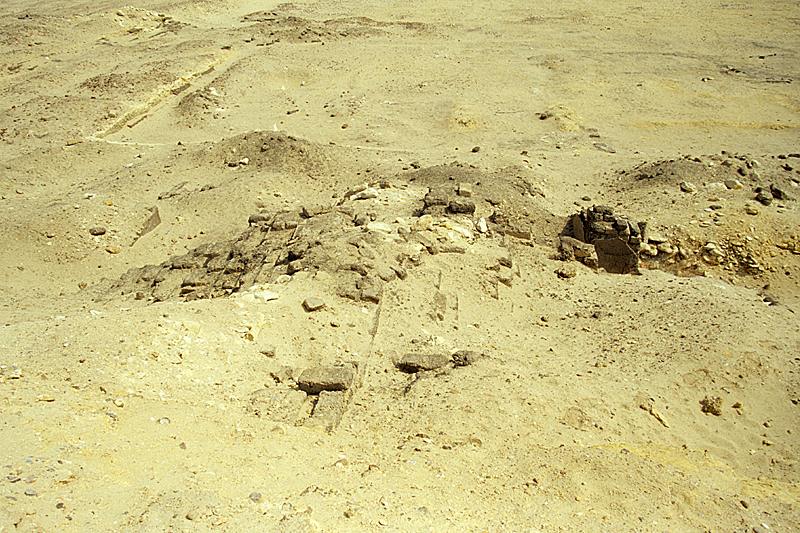
Flinders Petrie first encountered the ancient settlement in 1887 and carried out major excavations in 1889–1890. His work revealed a planned town with streets, courtyards and houses of very different sizes.
Some were large residences with numerous rooms and spacious courtyards, while others were smaller and more closely grouped together. Their arrangement suggests that people connected with the same royal establishment lived under quite different circumstances.
Archaeologists also recovered furniture fragments, tools, gaming pieces, cosmetics and other household objects.
These finds give us glimpses of activities that rarely appear in royal inscriptions. People prepared food, maintained their homes, played games, cared for their appearance and dealt with the practical demands of everyday life.
The discoveries don’t allow us to reconstruct every household or identify the owner of every object. Early excavations also recorded the exact findspots of individual items less consistently than modern archaeology would require.
Even with those limitations, Kahun remains one of the most informative settlements for understanding daily life in Middle Kingdom Egypt.
The Lahun Papyri: Ancient Egypt’s Everyday Records
The documents recovered at Lahun are among the most important surviving collections of Middle Kingdom papyri.
They fall into two broad groups: administrative records associated with Senusret II’s funerary cult and manuscripts found in different parts of the settlement.
The funerary accounts largely date to the reigns of Senusret III and Amenemhat III, while the town documents include material from the late Twelfth and early Thirteenth Dynasties.
Together, they preserve letters, legal records, medical writings, mathematical problems and accounts of supplies and work assignments.
Records from the royal cult show how the institution continued operating after the king’s death. Accounts list supplies, agricultural produce, personnel and other administrative matters.
But some of the most interesting papyri concern people dealing with surprisingly familiar problems.
A Woman’s Complaint About Her Weaving Workers
One revealing document is a letter associated with a woman named Ir.
In the surviving text, she complains that women assigned to her were unable to weave properly, leaving her unable to meet the expected quota of linen. She also raises concerns about another work assignment.
We don’t know exactly what position Ir held or whether she wrote the letter herself. But the frustration in her complaint is easy to recognize, even after nearly 4,000 years.
One of the Earliest Surviving Medical Texts About Women’s Health
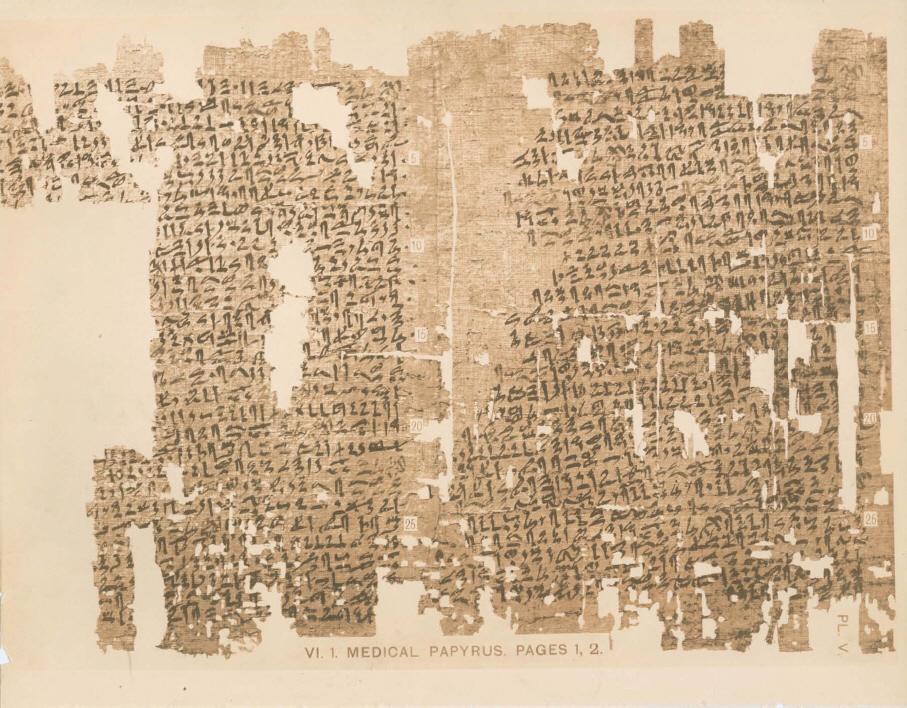
The Lahun collection also includes the manuscript commonly known as the Kahun Gynaecological Papyrus.
It contains medical material dealing with women’s health and related conditions. Few medical documents from this early period have survived, making the papyrus particularly valuable to historians.
Some passages are difficult to interpret because the manuscript is damaged or its terminology remains uncertain. Its explanations and treatments also reflect the medical beliefs of ancient Egypt rather than modern medical knowledge.
Other Lahun manuscripts preserve veterinary material and mathematical problems, including calculations that help researchers understand how Egyptian scribes worked with numbers.
University College London’s Lahun Papyri collection brings together examples of these records, including accounts, letters and specialized texts.
What Happened to Kahun?
Kahun’s main period of occupation was connected with the royal establishment and its continuing activities during the Middle Kingdom.
The town eventually declined as those institutions and their functions changed.
Parts of the settlement were reused during the New Kingdom and Byzantine periods, although these later occupations were separate from the original planned Middle Kingdom community. The wider Lahun area also contains cemeteries and remains from several periods of Egyptian history.
Its mudbrick buildings deteriorated over time. Much of what archaeologists know about Kahun now comes from Petrie’s excavation records, surviving architectural remains and objects removed for study.
Today, Kahun is an archaeological landscape rather than a preserved neighborhood of complete houses.
What Can Visitors Actually See at El Lahun Today?
The pyramid is the main landmark.
The pyramid rises above the surrounding landscape as a broad, weathered mound. Its original limestone casing is gone, and the exposed mudbrick has deteriorated considerably, making it difficult to imagine the monument’s original appearance.
When interior access is available, visitors can explore the underground passages and royal burial chamber. This offers a closer look at the unusual internal arrangement than the exterior alone can provide.
Around the pyramid are the remains of its temples and cemetery, although much of the original complex has disappeared.
Kahun is harder to appreciate simply by looking at the ground. Its mudbrick remains are not comparable to walking through a preserved stone temple or a reconstructed village. The settlement’s story comes largely from its excavated layout and the objects and documents recovered there.
If you’re arranging a visit specifically to see Kahun, ask in advance whether the settlement area can be included. Visiting the pyramid does not automatically mean you’ll be able to walk through the excavated town.
Is El Lahun Worth Visiting Compared With Other Pyramids?
If this is your first trip to Egypt, I would still prioritize Giza and Saqqara. Those sites offer a more immediate introduction to pyramid architecture, and their surviving monuments are far more substantial.
Dahshur is another excellent choice for understanding how pyramid engineering developed before the great pyramids at Giza.
El Lahun becomes particularly worthwhile when you’ve already seen those monuments or want to explore the Middle Kingdom in greater depth.
Its unusual construction, underground burial chamber and neighboring settlement make it a worthwhile stop for travelers who enjoy archaeological history, even though the visible remains are less impressive than those at better-known pyramid sites.
How to Visit El Lahun From Cairo or Fayoum
El Lahun lies southwest of Cairo, near the entrance to Fayoum.
A private vehicle with a driver is generally the most practical way to visit, particularly if you want to combine the pyramid with other archaeological stops.
Travel times depend on your starting point, traffic and the route taken. Allow enough time to explore the site without turning it into a rushed stop between distant attractions.
El Lahun can be included in a broader Fayoum itinerary, but the region’s attractions are spread across a substantial area. Trying to fit the pyramid, several archaeological sites and Fayoum’s more distant natural attractions into one day can leave very little time at each stop.
Before departure, confirm current opening arrangements, interior access and any restrictions affecting the Kahun settlement area.
Practical Tips for Visiting El Lahun
The site is exposed, so bring drinking water, sun protection and comfortable shoes suitable for uneven ground.
October through April generally offers more comfortable conditions for exploring open archaeological sites.
Carry your passport for identification and possible site-entry requirements.
If you intend to enter the pyramid, be prepared for underground passages and confined spaces. Anyone with mobility limitations or discomfort in enclosed areas should check the entry conditions before arranging the visit.
Frequently Asked Questions About El Lahun and Kahun
Can you visit El Lahun Pyramid?
Yes. The pyramid was officially opened to visitors in 2019 following restoration work. Confirm current opening arrangements and interior access before traveling.
Who built El Lahun Pyramid?
The pyramid was built for Senusret II, a pharaoh of Egypt’s Twelfth Dynasty during the Middle Kingdom.
Why does El Lahun Pyramid look like a mound?
The pyramid was built using a natural limestone core, structural stonework and mudbrick beneath an outer limestone casing. The loss of that casing and deterioration of the exposed mudbrick explain much of its present appearance.
What was Kahun in ancient Egypt?
Kahun is the name commonly used for the planned Middle Kingdom settlement associated with Senusret II’s pyramid complex. Its ancient name was probably Hetep-Senusret.
Was Kahun only a town for pyramid builders?
No. The settlement was associated with the royal funerary establishment and included people involved in administration, religious services and other work, along with their households. Its activities continued after Senusret II’s death.
Can visitors explore the ancient town of Kahun?
Kahun survives as an archaeological site rather than a reconstructed town. Access to particular areas may be restricted, so confirm current arrangements before visiting.
Why are the Lahun papyri important?
They preserve accounts, letters, medical writings, mathematical texts and other records that help historians understand Middle Kingdom administration and aspects of everyday life.
Should You Include El Lahun in Your Egypt Itinerary?
I wouldn’t make El Lahun a priority over Giza, Saqqara or Dahshur on a first trip to Egypt. Its weathered pyramid isn’t nearly as impressive from the outside, and there’s relatively little left of Kahun to explore.
But for someone interested in the Middle Kingdom, it’s an unusual and worthwhile stop. Few places give us such detailed evidence of the people who lived and worked around a royal pyramid complex.
If you’d like to include El Lahun in a Fayoum itinerary, contact Explore ENA to discuss a private visit.