Aswan Egypt Tours: Temples, Nile Beauty & the Gateway to Abu Simbel
Aswan is where Egypt slows down — and where the Nile becomes the main character.
Cairo can feel overwhelming. Luxor can feel monumental. But Aswan feels luminous and calm: granite islands rising from the river, palm-lined banks, pastel skies at sunset, and a pace that invites you to breathe.
For thousands of years, this region marked the southern frontier of ancient Egypt. Aswan served as a gateway between Egypt and Nubia, a vital trade corridor connecting the Nile Valley with cultures further south in Africa. Its strategic position made it a place of exchange — goods, people, and ideas moving along the river that defined Egyptian civilization.
Today, Aswan still holds that sense of transition.
It is the natural southern anchor of many Nile cruise itineraries, the home of some of Egypt’s most atmospheric island temples, and the starting point for one of the most unforgettable excursions in the country: Abu Simbel, the monumental temples of Ramses II carved into sandstone cliffs near the Sudanese border.
But Aswan’s appeal goes beyond individual sites. The city offers something travelers rarely find elsewhere in Egypt — space.
The Nile widens here. Granite boulders rise from the water. Feluccas drift between islands. Nubian villages bring vibrant color and living culture into the landscape.
If Luxor represents the power of ancient Egypt, Aswan represents its rhythm.
If you’re planning Aswan Egypt tours, you’re not simply adding another destination. You’re adding a different mood of Egypt — one that blends sacred island temples, Nubian heritage, and some of the most cinematic river scenery in the country.
This guide covers the high-value details most travelers miss: what’s truly worth seeing, how long to stay, how to structure your days, when to visit, and how to make Aswan feel relaxed and memorable rather than rushed.
Why Aswan Matters Historically (And Why It Feels Different)
Aswan has always been both a boundary and a bridge.
Where many Egyptian cities grew around political power or temple complexes, Aswan developed because of geography. Positioned near the southern limits of ancient Egypt, it controlled movement along the Nile between the Egyptian heartland and the lands of Nubia and central Africa.
That role shaped the city for thousands of years.
Egypt’s Ancient Southern Frontier
In ancient times, Aswan was known as Swenet and marked the southern frontier of Egypt.
From here, officials monitored trade and military movement along the Nile. Caravans and river expeditions passed through carrying valuable goods from Nubia and deeper regions of Africa. These trade routes brought gold, ebony, ivory, incense, animal skins, and other resources north into the Egyptian economy.
Because of this strategic position, Aswan functioned both as a military checkpoint and a commercial gateway.
The Granite That Built Ancient Egypt
Aswan is also famous for its granite quarries.
The hard pink and red granite extracted here was used in many of Egypt’s most important monuments. Obelisks, statues, temple columns, and architectural elements found across the country often began as stone blocks in the quarries surrounding Aswan.
This means Aswan was not only part of Egypt’s story—it helped physically build it.
Visitors can still see this connection today at the Unfinished Obelisk, where a massive stone monument remains partially carved into the bedrock, revealing the scale and difficulty of ancient quarrying techniques.
The Modern Story: Saving Ancient Monuments
In the twentieth century, Aswan again became globally significant.
The construction of the Aswan High Dam in the 1960s created Lake Nasser, one of the largest artificial lakes in the world. While the dam transformed Egypt’s ability to control Nile flooding and produce hydroelectric power, it also threatened many ancient temples located along the river’s southern reaches.
An international preservation effort led by UNESCO launched one of the most ambitious archaeological rescue operations ever attempted.
Temples including Philae and Abu Simbel were carefully dismantled, relocated, and reconstructed on higher ground to prevent them from disappearing beneath the rising waters.
Today, that rescue effort is considered one of the greatest achievements in global heritage preservation—and it remains a key part of the story visitors encounter when exploring Aswan.
Why Aswan Feels Different
Because of this layered history, Aswan carries a different atmosphere from many other Egyptian cities.
It is a place where ancient trade routes, monumental stone quarries, Nubian culture, and modern engineering projects intersect along one of the most beautiful stretches of the Nile.
That combination of history, landscape, and slower pace is what makes Aswan feel distinct within an Egypt itinerary.
Top Things to Do in Aswan Egypt
(What Actually Makes It Worth It)
If you experience Aswan well, your visit tends to revolve around four core moments. These experiences define the city and give it its distinct atmosphere.
Everything else in Aswan can be considered an upgrade — interesting additions if you have time — but these are what make the destination truly memorable.
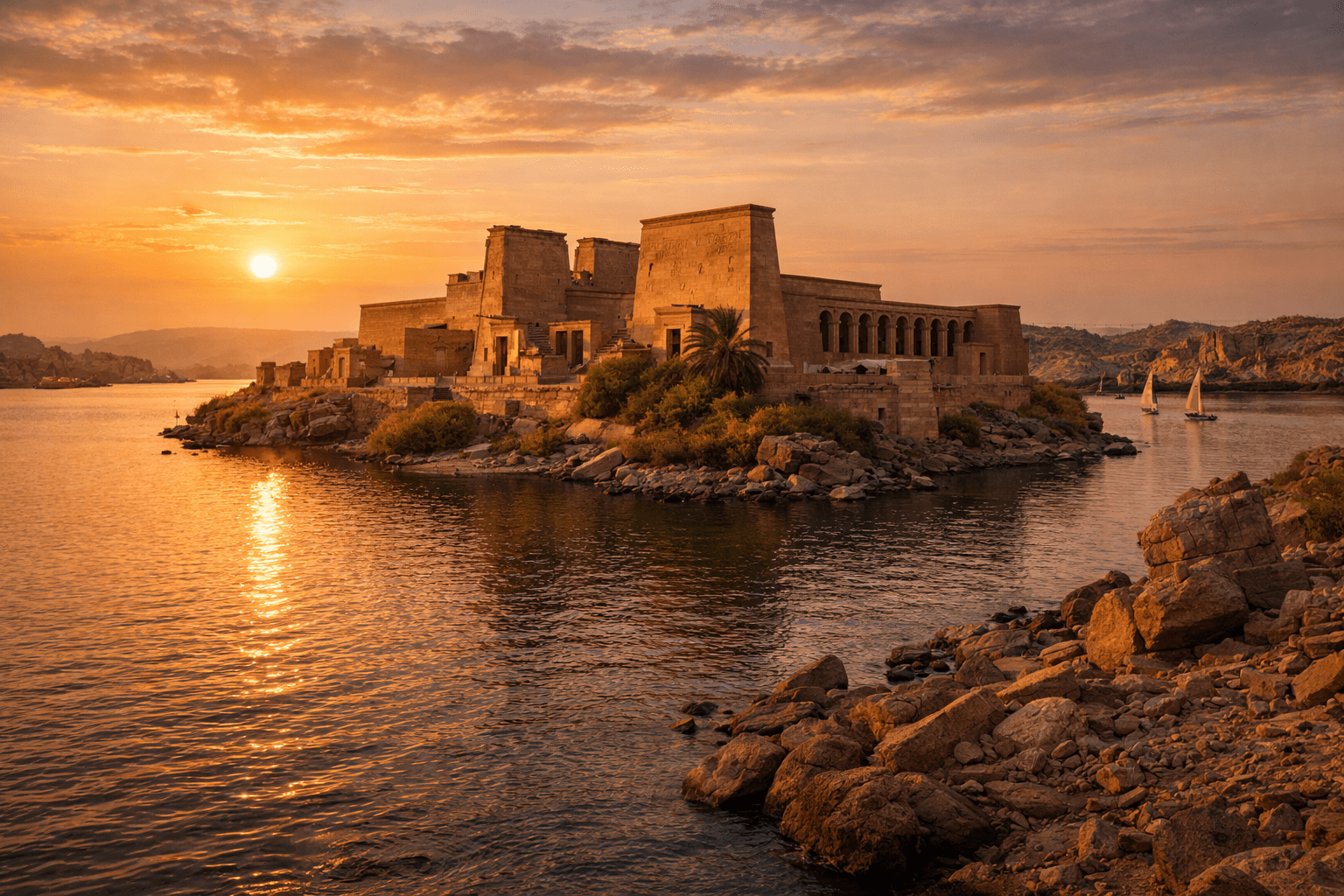
Philae Temple: The Island Temple You Arrive at by Boat
Philae is one of the most atmospheric temples in Egypt largely because of how you reach it.
You don’t walk to Philae — you glide to it. Boats cross the Nile to Agilkia Island, and the temple slowly appears between water and sky. That short journey changes the experience. You leave streets and traffic behind and approach ancient stone gradually, surrounded by water.
What Philae Represents
Philae was dedicated primarily to Isis, one of the most powerful and beloved deities in the ancient world. Isis represented healing, motherhood, protection, resurrection, and sacred magic.
The temple complex reflects centuries of devotion. Even as many ancient Egyptian temples declined during later periods, worship at Philae continued well into the Greco-Roman era.
Why the Temple Isn’t Where It Used to Be
Philae’s location today is part of its modern story.
The temple originally stood on Philae Island, but rising water levels threatened the complex during the construction of the Aswan High Dam. In the 1960s, an international preservation effort carefully dismantled the temple and reconstructed it on nearby Agilkia Island.
Standing at Philae today means witnessing two remarkable stories at once:
• Ancient religious devotion
• One of the most impressive modern heritage preservation projects ever attempted
How to Visit Philae Without Ruining It
Philae can become crowded if you arrive late in the day. The best experience usually includes:
• Visiting in the morning, when light is softer
• Allowing time to wander slowly through the complex
• Avoiding rushed “quick stop” tours
Philae rewards visitors who move slowly enough to notice the carvings, courtyards, and river views surrounding the temple.
Abu Simbel: The Day Trip That Justifies the Entire Aswan Stop
If someone asked what the most unforgettable day trip in Egypt might be, Abu Simbel would be near the top of the list.
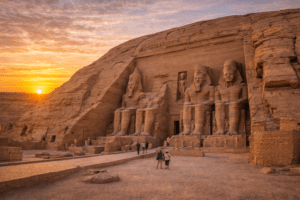
Built by Ramses II, these temples were carved directly into sandstone cliffs near Egypt’s southern frontier. The façade of the Great Temple features four colossal seated statues of the pharaoh — monuments designed to project power to anyone approaching Egypt from the south.
Why Abu Simbel Is More Than “Big Statues”
Abu Simbel represents several layers of meaning:
• Ramses II’s imperial ambition
• Egypt’s southern frontier power
• Monumental architecture carved directly into living rock
Inside the temple, relief carvings continue the story through battle scenes, sacred symbolism, and deeper sanctuaries aligned with solar events.
The Modern Miracle: Moving the Temple
Abu Simbel is also famous for being relocated.
When the Aswan High Dam created Lake Nasser, the rising water threatened to submerge the temples entirely. In one of the most ambitious conservation projects in history, engineers cut the temples into massive blocks and moved them to higher ground before reconstructing them in nearly the same orientation.
The result is extraordinary: visitors see both an ancient wonder and a modern engineering triumph.
How to Plan the Trip from Aswan
Most Abu Simbel visits follow one of two approaches:
• Private early-morning road trip (more flexibility)
• Group tours or organized transport
Regardless of the method, the key is the same: leave early. Heat and visitor numbers increase rapidly later in the day.
What Abu Simbel Feels Like
Abu Simbel often affects visitors differently than other sites. The location feels remote, the statues are overwhelming in scale, and the desert landscape surrounding the temple adds a sense of isolation and grandeur.
For many travelers, it becomes the emotional highlight of the entire Egypt journey.
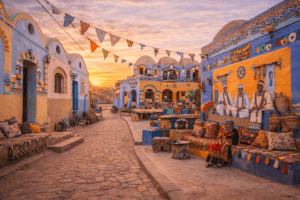
Nubian Culture: The Most Important “Non-Temple” Experience in Aswan
One of the most distinctive aspects of Aswan is its connection to Nubian culture.
Nubians are an indigenous people with a long history in the southern Nile Valley, spanning regions of modern Egypt and Sudan. Their language, architecture, art, and traditions form an important cultural layer that still shapes life in Aswan today.
What a Nubian Village Visit Should Include
A meaningful Nubian experience should offer more than quick photographs of colorful houses. The best visits include:
• Cultural context about Nubian heritage
• Time for conversation and hospitality
• Opportunities to see everyday life along the Nile
Nubian villages often sit in beautiful river locations, where bright painted homes contrast with desert hills and blue water.
Why Nubian Experiences Matter
From a travel perspective, Nubian culture adds something monuments cannot: living identity.
It brings human stories, hospitality, and local traditions into an itinerary otherwise focused heavily on ancient sites.
The Nile in Aswan: Why It’s the Best Place for a Felucca
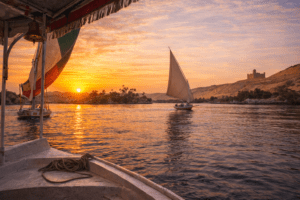
A felucca sail in Aswan is not just a pleasant activity — it’s one of the most atmospheric experiences in Egypt.
The Nile around Aswan is especially scenic. The river widens, granite islands rise from the water, and palm trees line the banks. At sunset, the light turns soft and golden across the landscape.
This is the version of the Nile many travelers imagine when they picture an ancient river journey.
How to Do a Felucca Sail Well
The best sailing experience usually includes:
• A late-afternoon departure that continues into sunset
• Enough time to feel relaxed rather than rushed
• Routes that pass quietly between islands rather than busy river traffic
A short sail can still be enjoyable, but longer trips often provide the most memorable atmosphere.
Aswan High Dam and Lake Nasser: Why It Matters to Your Tour
The Aswan High Dam is not the most beautiful stop, but it is important context.
It reshaped Egypt’s relationship with the Nile, enabling flood control and electricity generation, but it also created Lake Nasser and threatened ancient monuments—leading to the relocation of Philae and Abu Simbel.
For travelers who like “big picture” stories, a short stop here helps you understand why some sites are where they are today.
This is especially useful for turning your guide into an authority piece: it proves you’re not just listing attractions—you’re explaining context.
Unfinished Obelisk: The Most Underrated Learning Stop
If you want to understand how ancient Egypt built its monuments, the Unfinished Obelisk is one of the best places in the country.
It lies in Aswan’s granite quarries—still attached to bedrock—abandoned after cracks formed during carving. You can see tool marks and the scale of the project.
This is not a “wow photo” stop. It is a “wow understanding” stop.
Visitors who want deeper historical comprehension love it.
Elephantine Island: Quiet History + River Views
Elephantine Island was historically significant as a border and administrative center. Today, it offers quieter archaeological remains and beautiful Nile scenery.
This stop is best for travelers who:
- Prefer slower exploration
- Want river atmosphere
- Want a break from the major “must see” route
It can be a calming counterbalance if your itinerary feels intense.
How Many Days Should You Spend in Aswan?
The right amount of time in Aswan depends on how deeply you want to explore the region. While the city itself is smaller than Cairo or Luxor, several of its most important experiences require thoughtful pacing.
For most travelers, two to three days creates the ideal balance between major highlights and the relaxed atmosphere that makes Aswan special.
Minimum Stay: 2 Days
Two days allows you to experience Aswan’s most important sites without feeling rushed.
A typical two-day structure might look like this:
Day 1
- Philae Temple
- Felucca sail on the Nile at sunset
- Optional Nubian village visit
Day 2
- Abu Simbel day trip
- Evening in Aswan town or along the Nile
This schedule covers the core experiences that define the city.
Ideal Stay: 3 Days
Three days allows for a much more relaxed rhythm and gives you space to explore beyond the essential highlights.
A balanced three-day itinerary might include:
Day 1
- Philae Temple
- Aswan High Dam
- Unfinished Obelisk
Day 2
- Abu Simbel excursion
- Sunset felucca sail
Day 3
- Nubian village visit
- Elephantine Island or relaxed Nile exploration
With three days, Aswan begins to feel less like a checklist and more like a place you actually experience.
Longer Stays: 4 Days or More
Travelers who stay longer often do so because they enjoy the pace and scenery of the Nile in Aswan.
Extra time allows for:
- More time on the river
- Deeper cultural experiences in Nubian communities
- Slower exploration of islands and archaeological areas
- Relaxation before or after a Nile cruise
For many visitors, the longer they stay in Aswan, the more they appreciate its calm atmosphere compared to Egypt’s larger cities.
How Aswan Fits Into an Egypt Itinerary
Aswan often works best toward the end of an Egypt journey.
A common route looks like this:
Cairo → Luxor → Nile Cruise → Aswan
By the time travelers arrive in Aswan, they have usually experienced Egypt’s most intense historical destinations. The slower pace of the river, island temples, and Nubian culture creates a natural conclusion to the trip.
In that sense, Aswan is not just another stop — it is the moment when the journey begins to slow down.
Best Time to Visit Aswan Egypt
Aswan is one of the sunniest places in Egypt, and its desert climate shapes how visitors experience the city throughout the year. Because many attractions involve outdoor exploration—temples, island boat rides, and desert excursions—seasonal temperatures play an important role in planning your trip.
October to April: The Most Comfortable Season
For most travelers, the best time to visit Aswan is between October and April.
During these months, daytime temperatures are warm but manageable, making it easier to explore sites like Philae Temple, the Unfinished Obelisk, and Elephantine Island without excessive heat. Evenings are cooler and often perfect for felucca sails along the Nile.
This period also aligns with the peak season for Nile cruises, which frequently end or begin in Aswan.
May and September: Warm but Still Manageable
Late spring and early autumn can still be good times to visit, especially for travelers comfortable with warmer conditions.
Temperatures begin to climb, but early morning excursions and sunset river experiences still feel enjoyable. Because these months fall just outside peak tourism season, some travelers appreciate the slightly smaller crowds.
June to August: Extreme Summer Heat
Summer in Aswan can be intense. Daytime temperatures regularly exceed 40°C (104°F), and many outdoor sites offer limited shade.
While travel is still possible, visits during these months usually require very early morning tours, careful pacing, and plenty of hydration. Some travelers choose to combine summer visits with more time on the Nile or in air-conditioned environments.
Why the Season Matters
The climate difference between Upper Egypt and the Red Sea coast can shape how you structure an itinerary.
Many travelers explore Cairo and Luxor first, then move south to Aswan before finishing their trip with a cooler coastal stay in places like Hurghada. This progression allows you to experience the historical heart of Egypt while ending the journey in a more relaxed environment.
When planned thoughtfully, the timing of your visit can make Aswan feel far more comfortable—and far more memorable.
How to Get to Aswan
Most travelers reach Aswan from Cairo or Luxor, and there are several ways to travel depending on your schedule and comfort preferences.
Flying to Aswan
The fastest option is a domestic flight from Cairo.
Flights typically take about 1.5 hours and arrive at Aswan International Airport, located roughly 25 minutes from the city center. Many travelers choose this option when connecting directly from Cairo after visiting the pyramids or museums.
Traveling by Nile Cruise
One of the most memorable ways to reach Aswan is by Nile cruise from Luxor.
Cruises usually take 3–4 nights and stop at temples along the river such as Edfu and Kom Ombo. This route allows travelers to experience Upper Egypt gradually rather than jumping between destinations.
Train from Cairo to Aswan
Egypt’s sleeper train runs between Cairo and Aswan overnight.
The journey takes about 12–14 hours and is often chosen by travelers who enjoy rail travel or want to save a night of hotel accommodation.
Road Transfer from Luxor
Luxor is about 3–4 hours from Aswan by road, making private car transfers a practical option.
Many travelers combine Luxor and Aswan in the same itinerary, visiting Luxor’s temples first and then continuing south toward Aswan for island temples, Nubian culture, and access to Abu Simbel.
Which Should You Prioritize?
If your schedule allows, visiting both Luxor and Aswan creates the most complete experience of Upper Egypt. The two destinations complement each other rather than compete.
However, they deliver very different types of experiences.
Luxor is about scale and density. It offers monumental temples, richly decorated royal tombs, and one of the most concentrated collections of ancient Egyptian sites in the world. Walking through Karnak, descending into the Valley of the Kings, and exploring the temples of the West Bank can feel overwhelming—in the best possible way.
Aswan, by contrast, is defined more by atmosphere than monumentality. The Nile widens here, granite islands rise from the water, and traditional feluccas drift quietly between palm-lined banks. Island temples like Philae, access to Abu Simbel, and encounters with Nubian culture create a more relaxed and scenic experience.
In simple terms:
Luxor overwhelms with architecture.
Aswan captivates with beauty and mood.
For travelers who want the full story of Upper Egypt, Luxor provides the monumental heart of ancient Egypt, while Aswan provides the quiet, cinematic ending to the journey along the Nile.
Is Aswan Worth Visiting If You’re Already Doing a Nile Cruise?
A Nile cruise begins or ends in Aswan, but that doesn’t necessarily mean you’ve had much time to experience the city itself.
Whether you need an additional hotel night depends on what your cruise itinerary already includes, whether Abu Simbel is part of your plans, and how much time you want for places such as the Nubian Museum, Elephantine Island or simply being on the Nile without another departure hanging over you.
If you’re trying to decide whether the cruise gives you enough time or whether an extra night is worthwhile, see our complete guide to whether Aswan is worth staying in beyond your Nile cruise.
FAQs: Aswan Egypt Tours
Is Abu Simbel worth it from Aswan?
Yes — for most travelers, Abu Simbel is absolutely worth the trip from Aswan. It is one of Egypt’s most iconic monuments and one of the few sites where both the ancient and modern stories are equally dramatic.
Built by Ramses II near Egypt’s southern frontier, the temples were designed to project power and permanence. The colossal statues alone make the journey worthwhile, but the deeper value comes from the combination of scale, setting, and meaning. Abu Simbel is also famous for having been relocated in one of the greatest heritage preservation projects in history after the creation of Lake Nasser threatened to submerge it.
For many visitors, it becomes one of the most unforgettable experiences in all of Egypt.
How long do you need in Aswan?
Most travelers need at least two days in Aswan, though three days is ideal if you want the city to feel relaxed rather than rushed.
A two-day stay usually works well like this: one day for Philae Temple, the Unfinished Obelisk, or a felucca sail, and one separate day for Abu Simbel. That covers the essentials.
Three days gives you breathing room. It allows time for a Nubian village experience, a longer Nile sail, or slower exploration of islands and local scenery. Because Aswan’s appeal is as much about mood and pacing as it is about monuments, the extra time often improves the experience significantly.
Is Aswan safe?
Yes. Aswan is generally considered one of Egypt’s calmer and more tourism-friendly destinations.
The city is a regular stop on Nile cruise routes and has long been part of the standard tourist circuit. Major attractions such as Philae Temple, the High Dam, and Abu Simbel excursions are well organized, and the overall atmosphere is noticeably quieter than Cairo.
As with any destination, normal travel awareness still matters. It is wise to use reputable drivers, guides, and tour operators, especially for long-distance trips such as Abu Simbel. But most visitors find Aswan easy to navigate, welcoming, and much less overwhelming than Egypt’s larger cities.
What’s the best thing to do in Aswan besides temples?
The best non-temple experiences in Aswan are usually a Nubian village visit and a sunset felucca sail on the Nile.
A Nubian visit adds cultural depth to the itinerary because it introduces a living identity that is still central to southern Egypt. Done well, it offers more than colorful houses — it gives travelers a sense of hospitality, local rhythm, and the human side of the Nile.
A felucca sail, especially in the late afternoon, is one of the most beautiful experiences in Egypt. Granite islands, palm-lined banks, and soft sunset light make Aswan one of the best places in the country to experience the Nile itself rather than just the monuments beside it.
Do I need a guide in Aswan?
You can visit Aswan independently, but a guide often adds significant value — especially at Philae Temple, the Unfinished Obelisk, and Abu Simbel.
The main benefit is context. Sites like Philae are much more meaningful when someone explains why Isis mattered, how the temple functioned, and why it had to be relocated. At Abu Simbel, a guide can connect the monument to Ramses II’s political ambitions, the southern frontier, and the modern UNESCO rescue effort.
Guides also help with logistics. Aswan is calmer than Cairo, but planning boat transfers, timing temple visits, and organizing longer excursions becomes much smoother with expert support.
Is Abu Simbel a day trip from Aswan?
Yes. Abu Simbel is one of the most famous day trips from Aswan.
The site is located roughly 3 to 4 hours south by road, so most excursions leave very early in the morning and return later the same day. Some travelers choose private transport for more flexibility, while others join organized group departures.
Although it requires an early start, the trip is considered worthwhile by most visitors because Abu Simbel is one of the most visually powerful monuments in Egypt. If you are already in Aswan and have the time, it is usually one of the best upgrades you can make to your itinerary.
Is Aswan better than Luxor?
Aswan and Luxor offer very different experiences, so most travelers should think of them as complementary rather than competing destinations.
Luxor is the more monument-heavy city. It is the place of Karnak, the Valley of the Kings, and the great temple landscapes of ancient Thebes. Travelers who want maximum archaeological density often find Luxor more overwhelming and historically intense.
Aswan, by contrast, is more scenic and atmospheric. It offers island temples, wider Nile views, Nubian culture, and access to Abu Simbel. The mood is calmer and more spacious.
If Luxor overwhelms with architecture, Aswan wins with beauty and pace. Most travelers are happiest when they include both.
Can you take a felucca ride in Aswan?
Yes — and for many travelers, a felucca ride in Aswan is one of the best experiences in Egypt.
Aswan is especially well suited for felucca sailing because the Nile is wider and more visually dramatic here than in many other parts of the country. Granite islands rise from the river, palm trees line the banks, and the light becomes particularly beautiful in the late afternoon.
The best time to sail is usually late afternoon into sunset, when the breeze is pleasant and the atmosphere feels unhurried. A short ride is enjoyable, but a longer sail gives you time to really feel the landscape. In many ways, it is the Nile experience travelers imagine before they arrive in Egypt.
Is Aswan part of a Nile cruise route?
Yes. Aswan is one of the two main anchor points of the classic Nile cruise route between Luxor and Aswan.
Most cruises either begin in Aswan and sail north to Luxor, or begin in Luxor and end in Aswan. Along the way, they usually stop at sites such as Edfu and Kom Ombo. Because of its location, Aswan often serves as the southern gateway to the Nile cruise experience.
However, travelers should know that cruise itineraries usually give only the highlights of Aswan. Spending an extra night before or after the cruise can make a big difference if you want more time for Abu Simbel, Nubian culture, or a longer felucca sail.
What is Aswan most famous for?
Aswan is most famous for its beautiful Nile scenery, Philae Temple, Nubian culture, and its role as the gateway to Abu Simbel.
Unlike Luxor, which is defined by monumental temple density, Aswan is known for atmosphere as much as archaeology. Granite islands, palm-lined riverbanks, and traditional feluccas give the city one of the most distinctive landscapes in Egypt.
Historically, Aswan was also important as Egypt’s ancient southern frontier and a major granite quarrying center. In modern times, it became internationally significant because of the Aswan High Dam and the rescue of monuments threatened by Lake Nasser.
That combination of beauty, history, and river culture is what makes Aswan unique.
Is Aswan worth visiting if I’m already doing a Nile cruise?
Yes — because a cruise often gives you the highlights, but not always the best pace.
Many Nile cruise itineraries include a visit to Philae Temple, but it can feel brief. Abu Simbel is usually an optional add-on rather than a standard stop. Nubian village visits vary widely in quality, and felucca time is often shorter than what many travelers would prefer.
If you enjoy river scenery, cultural depth, and slower travel, adding one extra night in Aswan before or after your cruise can be one of the best decisions in Egypt. It turns the city from a quick endpoint into a destination you actually experience.
Final Thoughts: Why Aswan Completes the Egypt Experience
Aswan is where Egypt exhales.
After the intensity of Cairo’s pyramids and the monumental scale of Luxor’s temples, Aswan offers something different: light, water, and space. The Nile widens here. Granite islands break the current. Feluccas drift through the river the way they have for centuries.
But Aswan is not just a peaceful landscape. It is also a historical gateway — the southern frontier of ancient Egypt, a crossroads with Nubia and Africa, and the launch point for one of the most extraordinary monuments in the country: Abu Simbel.
This balance is what makes Aswan special.
You can explore sacred island temples like Philae, sail the Nile at sunset, experience Nubian culture, and then stand before the colossal statues of Ramses II at Abu Simbel — all within a single region.
In many ways, Aswan provides the emotional ending that Egypt itineraries need. It slows the pace, deepens the story, and reconnects the monuments to the river that made them possible.
If you want your Egypt journey to feel complete — not just historic, but atmospheric — Aswan belongs in the plan.
Ready to experience Egypt’s most beautiful Nile landscapes? Explore our curated Aswan Egypt tours designed to combine Philae Temple, Abu Simbel, Nubian culture, and scenic felucca sailing with expert pacing and local insight. You can also explore more about the region on our Aswan destination page while planning how it fits into a broader itinerary that includes Luxor, a Nile cruise, or a full journey through Egypt.