Luxor Egypt Tours: The Complete Guide to Ancient Thebes
Luxor is one of the few places in the world where ancient history feels almost overwhelming in its scale.
Temples rise from the desert like stone mountains. Tomb corridors stretch deep into cliffs painted with scenes more than three thousand years old. Massive statues of long-dead kings still guard entrances that once led to sacred rituals and royal ceremonies.
Long before the city was called Luxor, it was known as Thebes, the capital of Egypt during the New Kingdom (c. 1550–1070 BC). This was the golden age of ancient Egyptian power — the era of pharaohs such as Hatshepsut, Thutmose III, Seti I, and Ramses II, rulers whose monuments defined the height of Egyptian architecture, art, and religious ambition.
Many of Egypt’s most famous archaeological sites were built here during this period. Today, Luxor holds one of the greatest concentrations of ancient monuments anywhere on Earth.
But Luxor is not just a collection of ruins.
It is a landscape carefully designed around ancient beliefs about life, death, and the afterlife.
The Nile River divides the city into two symbolic halves that still shape how visitors experience Luxor today.
On the East Bank, ancient Egyptians built the great temples dedicated to the gods — most famously Karnak Temple and Luxor Temple — places where rituals connected the pharaoh, the priesthood, and the divine world.
Across the river on the West Bank, the desert cliffs hold vast royal burial grounds including the Valley of the Kings, the Valley of the Queens, and monumental mortuary temples built to preserve the legacy of powerful rulers.
Together, these two landscapes create what many historians describe as the world’s greatest open-air museum.
For modern travelers, Luxor offers something unique: the chance to move through the physical remains of one of history’s most powerful civilizations.
This guide explains what to see, how to plan your time, and how to experience Luxor in a way that feels immersive rather than rushed — whether you are visiting for a single day or building a deeper exploration of ancient Thebes.
Why Luxor Is the Most Important City for Ancient Egypt Lovers
For travelers fascinated by ancient Egypt, no destination delivers the experience as completely as Luxor.
During the New Kingdom (c. 1550–1070 BC), the city then known as Thebes became the religious and ceremonial heart of the Egyptian empire. While earlier dynasties had built pyramids in the north, the rulers of the New Kingdom turned Thebes into a monumental landscape dedicated to divine power, royal legacy, and the journey into the afterlife.
Pharaohs invested enormous resources into temples dedicated primarily to Amun-Ra, the supreme god of the Theban religious system. These temples were not simply places of worship. They were centers of political authority, economic power, and ritual performance that reinforced the idea that the pharaoh ruled with divine approval.
Over centuries, successive kings expanded these sacred complexes, adding pylons, courtyards, obelisks, and colossal statues that proclaimed their legitimacy and their connection to the gods.
When you visit Luxor today, you are not exploring a single monument.
You are walking through an entire sacred landscape built over generations.
On the East Bank of the Nile stand the great temple complexes — most famously Karnak Temple, one of the largest religious structures ever built, and Luxor Temple, which once connected to Karnak through a ceremonial avenue lined with sphinx statues.
Across the river on the West Bank lie the burial grounds of the kings and queens. Here, hidden within the desert cliffs, pharaohs built elaborately decorated tombs intended to guide them safely into the afterlife. The Valley of the Kings, where Tutankhamun’s tomb was discovered in 1922, remains one of the most famous archaeological sites in the world.
What makes Luxor especially remarkable is the concentration of history.
In a relatively small geographic area, travelers can explore monumental temples, royal tombs filled with intricate artwork, and mortuary temples built to preserve the memory of powerful rulers.
Few places in the world allow visitors to experience so many masterpieces of ancient architecture and art within such a short distance.
That concentration is why Luxor often becomes the most memorable destination in Egypt.
Unlike museums, where artifacts sit behind glass, Luxor’s history exists in the landscape itself. The temples still rise from the earth where they were built, the tomb walls still display their ancient paintings, and the Nile continues to flow between the same riverbanks that shaped the city thousands of years ago.
In Luxor, ancient Egypt is not something you simply observe.
It is something you walk through.
Why Luxor Was the Capital of the New Kingdom
To understand why Luxor matters so much, you need to understand the period when it was known as Thebes, the capital of Egypt during the New Kingdom (c. 1550–1070 BC).
This era marked the height of ancient Egyptian power. After expelling foreign rulers known as the Hyksos, Egyptian kings from Thebes began expanding their influence across the eastern Mediterranean and deep into Nubia. Wealth flowed into Egypt through trade, tribute, and military campaigns.
Much of that wealth was invested in monumental architecture, especially temples dedicated to the god Amun-Ra.
Thebes became the spiritual center of the empire, and its temples grew into some of the most ambitious construction projects in the ancient world.
The largest of these was Karnak Temple, which expanded continuously for centuries as successive pharaohs added new pylons, courtyards, and shrines. Each ruler attempted to outdo the achievements of those who came before, turning the complex into an enormous statement of divine power and royal legitimacy.
But the city was designed with deeper symbolism as well.
Ancient Egyptians believed the cycle of the sun represented the cycle of life and death. The East Bank, where the sun rises, became the place of temples and ritual life. The West Bank, where the sun sets behind the desert cliffs, became the realm of the dead.
This belief shaped the entire landscape of Luxor.
On the East Bank stood the temples where priests performed rituals and festivals honoring the gods. Across the Nile on the West Bank, pharaohs constructed elaborate tombs in hidden valleys, along with mortuary temples meant to preserve their memory for eternity.
One of the most important events linking these two worlds was the Opet Festival, a major religious celebration in which statues of the gods were carried in procession from Karnak Temple to Luxor Temple along a ceremonial avenue lined with sphinx statues.
These rituals reinforced the idea that the pharaoh ruled with divine authority and that the gods themselves had chosen him to govern Egypt.
Today, when visitors walk through Luxor, they are moving through the physical remains of this sacred landscape — a place where religion, politics, and architecture were inseparable.
It is this extraordinary concentration of temples, tombs, and monuments that makes Luxor one of the most important archaeological destinations in the world.
Top Things to Do in Luxor, Egypt
Luxor contains one of the greatest concentrations of ancient monuments anywhere in the world. Unlike Cairo, where historical sites are scattered across a vast modern city, Luxor’s major attractions form a coherent landscape along both sides of the Nile.
On the East Bank, enormous temple complexes once served as the ceremonial and religious center of ancient Thebes. Across the river on the West Bank, desert cliffs conceal royal tombs and mortuary temples connected to the afterlife.
Together, these sites form what many historians call the world’s greatest open-air museum.
Karnak Temple Complex
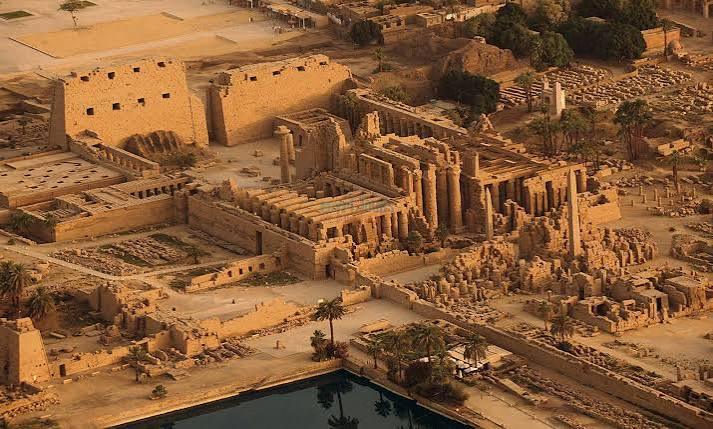
No visit to Luxor is complete without exploring the Karnak Temple Complex, the largest religious structure ever built in ancient Egypt.
Karnak is not a single temple. It is a vast sacred city that evolved over nearly two thousand years, with pharaohs from multiple dynasties expanding and rebuilding the site to honor the god Amun-Ra.
Walking through Karnak today reveals layer upon layer of construction. Each ruler added pylons, courtyards, shrines, and statues to reinforce their connection to the gods and their legitimacy as rulers of Egypt.
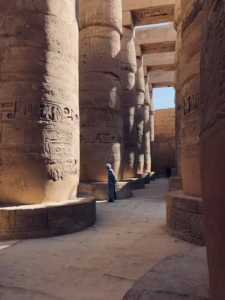
The most famous area of the complex is the Great Hypostyle Hall. Here, more than a hundred massive columns rise high above visitors, creating what many describe as a “stone forest.” These towering columns once supported a roof that darkened the hall, allowing shafts of sunlight to illuminate the carved hieroglyphs along the walls.
Many travelers are surprised to learn that the temples were once fully painted in vibrant colors. Traces of these pigments remain visible today, reminding visitors that ancient Egyptian architecture was far more visually dramatic than the stone surfaces we see now.
Karnak is also one of the places in Luxor where a knowledgeable guide can dramatically improve the experience. Without context, the site can appear as a collection of enormous columns and walls. With context, Karnak becomes a story of political theology, showing how pharaohs used architecture to communicate divine authority.
Luxor Temple
Unlike Karnak, which stands slightly outside the modern city center, Luxor Temple sits directly within the rhythm of modern Luxor.
Cars pass nearby, cafés and shops line the surrounding streets, and daily life unfolds just outside the temple walls. That contrast between ancient monument and modern city is part of what makes the site so memorable.
Most of the temple was built during the reign of Amenhotep III and later expanded by Ramses II. The temple played a central role in royal rituals, particularly festivals designed to reaffirm the pharaoh’s divine connection to the gods.
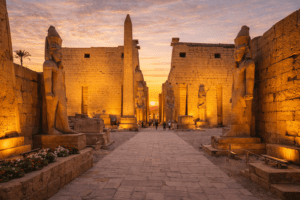
One of the most impressive features of Luxor Temple is the recently restored Avenue of Sphinxes, a ceremonial road that once connected the temple to Karnak several kilometers away. In ancient times, religious processions traveled this route during important festivals.
Luxor Temple is also one of the best sites in Egypt to visit at sunset or after dark.
As evening lighting illuminates the columns and statues, the carvings become more dramatic and the temple takes on a theatrical atmosphere. Many visitors find the nighttime experience even more powerful than visiting during the day.
West Bank Luxor: The City of the Dead
If the East Bank represents life and divine ritual, the West Bank of Luxor represents death and the afterlife.
Ancient Egyptians associated the west — where the sun sets — with the journey into the next world. For this reason, pharaohs built their royal tombs and memorial temples on the western side of the Nile.
The result is a desert landscape filled with some of the most remarkable archaeological sites in Egypt.
Valley of the Kings
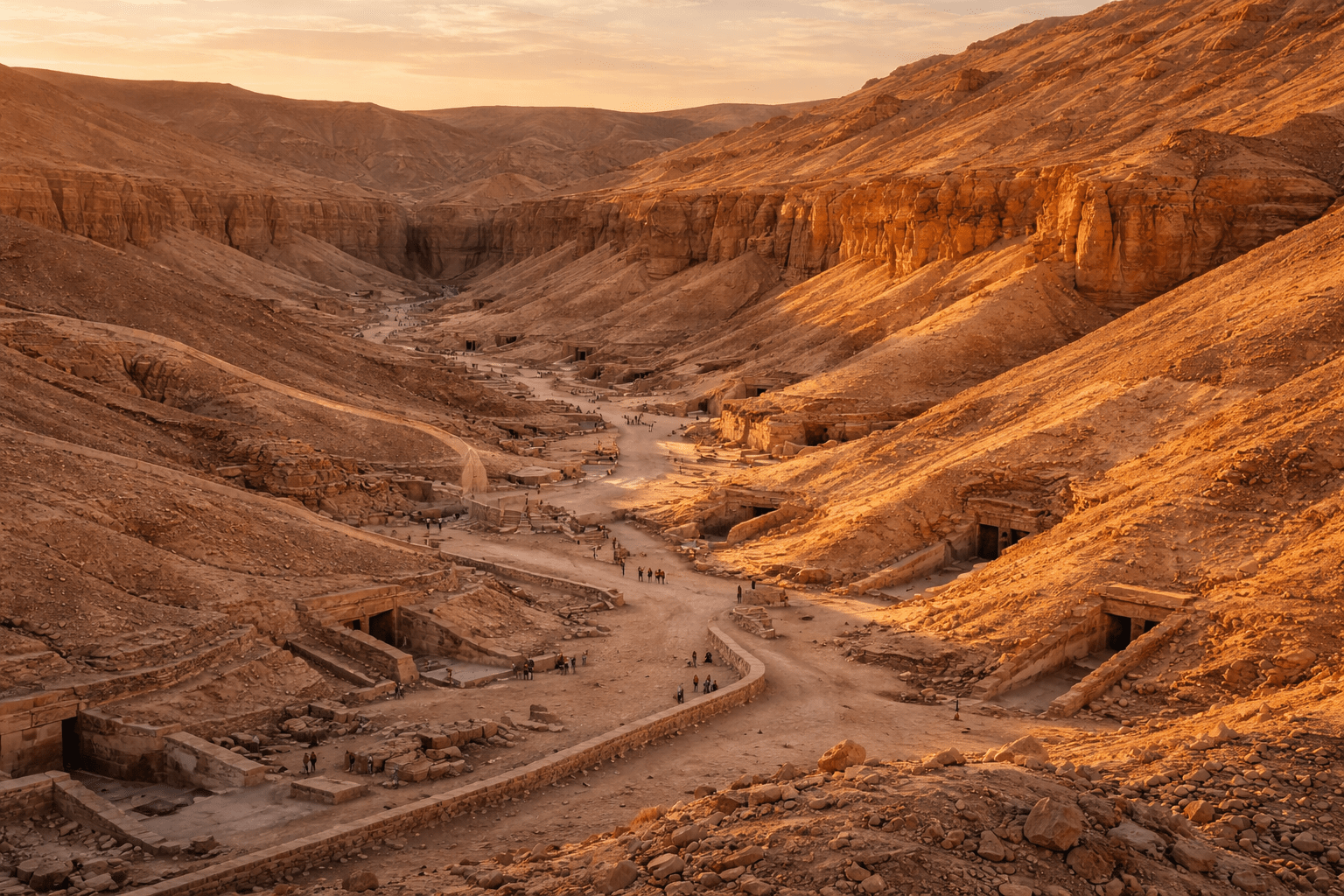
The Valley of the Kings served as the primary burial ground for New Kingdom pharaohs.
Instead of constructing pyramids, which had proven vulnerable to tomb robbers, these rulers chose to hide their tombs deep within the desert cliffs. The entrances were concealed and the burial chambers extended underground in long corridors carved into the rock.
The valley contains more than sixty known tombs, including the famous tomb of Tutankhamun, discovered by Howard Carter in 1922.
What makes the Valley of the Kings extraordinary is the artwork.
The walls of many tombs are covered with vividly painted scenes depicting the pharaoh’s journey through the underworld. These images were not simply decorative. They represented sacred texts and symbolic maps meant to guide the king safely into the afterlife.
Most entry tickets allow visitors to explore several tombs, while particularly famous ones may require an additional ticket.
A well-planned visit focuses on quality rather than quantity, choosing tombs that show different layouts, artistic styles, and levels of preservation.
One practical tip that makes a significant difference: arrive early in the morning. The combination of desert heat and large crowds can make later visits much less enjoyable.
Temple of Hatshepsut at Deir el-Bahari
Few monuments in Egypt are as visually striking as the Temple of Hatshepsut.
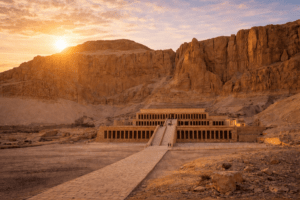
Built into the cliffs of Deir el-Bahari, the temple rises in a series of terraces that create a remarkably symmetrical design against the dramatic desert landscape.
The architecture feels surprisingly modern in its clean lines and balanced proportions, yet its symbolism reflects traditional Egyptian beliefs about kingship and divine authority.
Hatshepsut herself was one of the most remarkable rulers in Egyptian history. As a female pharaoh, she carefully crafted an image of legitimacy through architecture and inscriptions that emphasized her divine birth and successful rule.
The temple also contains reliefs describing one of her most famous achievements: an expedition to the land of Punt, which brought exotic goods and trade wealth back to Egypt.
Standing on the terraces of the temple, visitors can see how the surrounding cliffs frame the monument, creating one of the most dramatic settings in all of ancient Egyptian architecture.
Colossi of Memnon
The Colossi of Memnon are two massive statues that once guarded the entrance to the mortuary temple of Amenhotep III.
Although the temple itself has largely disappeared over time, the statues remain as reminders of what was once one of the most enormous royal complexes in ancient Egypt.
Each statue stands more than eighteen meters tall and depicts the seated pharaoh gazing east toward the rising sun.
Today, the Colossi are often treated as a brief photo stop during West Bank tours. But their deeper significance lies in the scale of the original temple complex that surrounded them.
Luxor’s West Bank was never just a collection of tombs. It was an entire landscape of monuments built to preserve the memory of kings long after their deaths.
Optional West Bank Upgrades (Worth It if you have time)
If you can add one extra stop beyond the “standard trio,” choose based on what you love:
- If you want epic wall scenes: Medinet Habu (often a favorite for serious history lovers)
- If you want a quieterOptional West Bank Sites Worth Adding
- If your schedule allows time beyond the standard West Bank highlights, several additional sites can significantly deepen your Luxor experience.
- Medinet Habu is often a favorite for travelers interested in ancient art and architecture. The temple of Ramses III contains some of the best-preserved wall reliefs in Egypt.
- The Valley of the Queens offers a quieter tomb experience and includes the famous tomb of Queen Nefertari, known for its exceptionally vibrant paintings.
- Adding one of these sites can help transform a standard West Bank visit into a deeper exploration of ancient Thebes. tomb experience: Valley of the Queens
- If you want a more complete Thebes story: a guided “west bank circuit” with better pacing
How Many Days Should You Spend in Luxor?
One of the most common planning questions travelers ask is simple: how many days do you need in Luxor?
Because the city contains such a dense concentration of temples, tombs, and archaeological sites, Luxor can feel overwhelming if visitors try to see everything too quickly.
The key is understanding how the city is structured.
Luxor is divided by the Nile into two main historical zones: the East Bank, where ancient Egyptians built temples dedicated to the gods, and the West Bank, where pharaohs constructed tombs and memorial temples connected to the afterlife.
Exploring both sides of the river properly takes time.
Minimum: Two Days in Luxor
For most travelers, two days is the minimum needed to experience Luxor without rushing through its most important sites.
A typical two-day structure separates the East Bank and West Bank, which keeps the schedule manageable and avoids excessive travel between locations.
Day 1: East Bank – Temples of the Living
Begin with the Karnak Temple Complex, the largest religious site in ancient Egypt. Because of its scale and historical importance, Karnak deserves several hours of exploration.
Later in the day, visit Luxor Temple, which sits within the modern city and offers a completely different atmosphere. Many travelers enjoy returning here again in the evening, when the temple lighting creates a dramatic nighttime experience.
Day 2: West Bank – Tombs of the Pharaohs
The second day focuses on Luxor’s West Bank, often called the City of the Dead.
Start early with the Valley of the Kings, where the tombs of New Kingdom pharaohs lie hidden within the desert cliffs. Visiting early helps avoid both heat and crowds.
From there, continue to the Temple of Hatshepsut at Deir el-Bahari, one of the most architecturally unique temples in Egypt.
Most tours conclude with a stop at the Colossi of Memnon, the massive statues that once guarded the mortuary temple of Amenhotep III.
Two days allows travelers to see Luxor’s most important highlights while still leaving time to absorb the scale and atmosphere of the sites.
Ideal: Three Days in Luxor
While two days covers the essentials, three days creates a much more relaxed and immersive experience.
The additional time allows travelers to explore beyond the standard highlights and appreciate Luxor’s atmosphere more fully.
A third day can include:
• additional tombs or temples on the West Bank such as Medinet Habu
• time exploring the Luxor Museum or other cultural sites
• a sunrise hot air balloon ride over the West Bank
• more time enjoying Luxor’s evening atmosphere along the Nile
Many travelers find that Luxor becomes far more memorable when they are not rushing between sites.
Instead of feeling like a checklist of monuments, the city begins to reveal itself as the sacred landscape that ancient Egyptians carefully designed thousands of years ago.
Why pacing matters in Luxor
Luxor is one of those destinations where time dramatically improves the experience.
Rushing through temples and tombs in a single day can quickly become exhausting, especially under the desert sun.
But when visitors allow themselves enough time to move between sites thoughtfully, the scale and beauty of ancient Thebes becomes much easier to appreciate.
And that is when Luxor truly becomes unforgettable.
Luxor as Part of a Nile Cruise
For many travelers, Luxor is not just a destination — it is the starting point of one of Egypt’s most iconic travel experiences: a Nile cruise.
Most traditional cruise itineraries run between Luxor and Aswan, following the same stretch of the Nile that ancient Egyptians used for trade, religion, and royal travel thousands of years ago.
Because Luxor contains such an extraordinary concentration of monuments, it often serves as the northern anchor of the journey.
Cruises that begin in Luxor typically start with several of Egypt’s most dramatic archaeological sites before the ship begins its slow journey south along the Nile.
Why Luxor Is the Perfect Starting Point
Beginning a Nile cruise in Luxor creates a powerful introduction to ancient Egypt.
The temples and tombs here represent the height of the New Kingdom, when Egypt reached its greatest wealth and political influence.
Visitors often explore:
• Karnak Temple, one of the largest religious complexes ever built
• Luxor Temple, connected to Karnak by the ancient Avenue of Sphinxes
• The Valley of the Kings, burial place of powerful New Kingdom pharaohs
• The Temple of Hatshepsut, built dramatically into the cliffs of the West Bank
Experiencing these monumental sites first helps travelers understand the scale of Egyptian architecture and religious ambition before continuing further along the Nile.
In many ways, Luxor acts as the grand opening of the temple journey.
What Happens After Luxor
Once the cruise departs Luxor, the pace of travel changes.
The massive temples of Luxor give way to a slower rhythm along the river as the ship moves south toward Aswan.
Along the way, travelers visit a series of temples that reveal different aspects of ancient Egyptian religion and daily life.
These often include:
• Edfu Temple, dedicated to the falcon god Horus
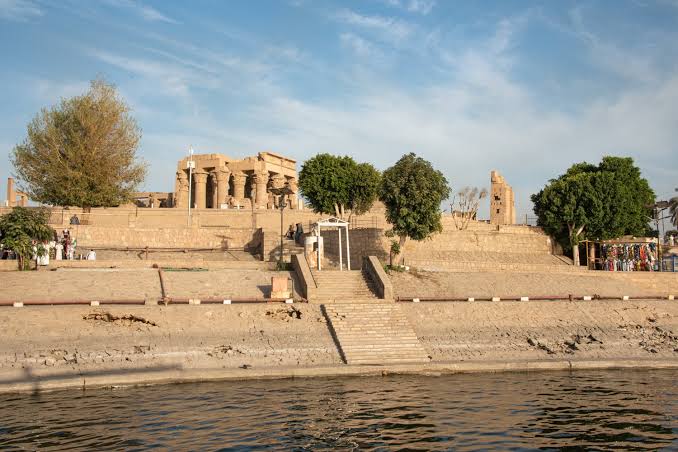
• Kom Ombo Temple, uniquely dedicated to two gods at once
• smaller archaeological sites along the Nile Valley
Between stops, the cruise offers something many land itineraries cannot: time to relax while watching the Nile landscape unfold.
Palm groves, small villages, agricultural fields, and desert cliffs pass slowly by — scenes that have changed remarkably little since ancient times.
Why Nile Cruises Remain Popular
Nile cruises remain one of the most popular ways to experience Upper Egypt for a simple reason: they combine transportation, sightseeing, and relaxation into one seamless journey.
Instead of packing and unpacking between cities, travelers move comfortably along the river while visiting major sites with organized excursions.
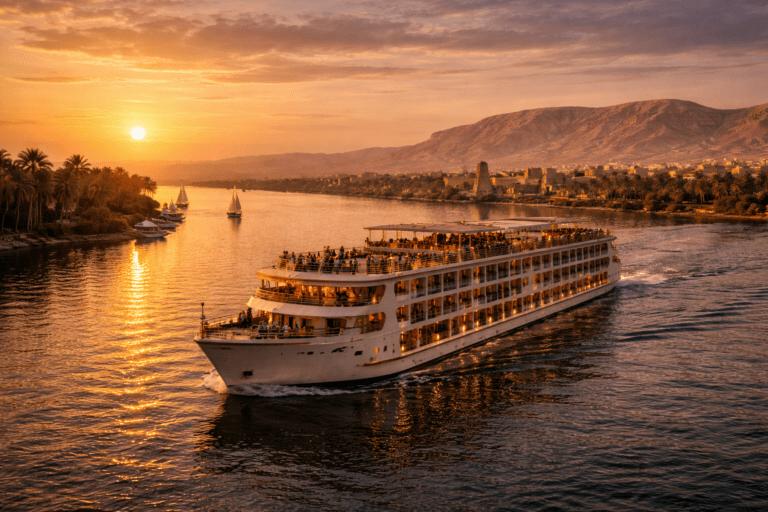
For many visitors, the experience of sailing the Nile — especially at sunset — becomes one of the most memorable parts of an Egypt trip.
Luxor’s Role in the Journey
Whether travelers begin their cruise in Luxor or end their journey there, the city serves as one of the most important chapters in the Nile story.
It introduces visitors to the grandeur of ancient Thebes, the religious center of the New Kingdom, and sets the stage for the temples and landscapes that follow further south.
In that sense, Luxor is not just a stop along the Nile.
It is the place where the story of the river — and the civilization built along its banks — truly comes into focus.
Best Time to Visit Luxor, Egypt
Luxor’s climate plays a major role in shaping the travel experience.
Unlike Alexandria or even Cairo, Luxor sits deep in Upper Egypt’s desert environment, where temperatures can rise dramatically during the summer months. Because most of Luxor’s major attractions — temples, tombs, and archaeological landscapes — are outdoors, the heat can affect how long visitors comfortably explore the sites.
For this reason, the timing of your visit can make a significant difference in how enjoyable Luxor feels.
October to April: The Most Comfortable Season
For most travelers, the best time to visit Luxor is between October and April.
During these months, daytime temperatures are much more comfortable for walking through temple complexes and exploring the West Bank’s archaeological sites. Average daytime highs typically range between 20–30°C (68–86°F), creating ideal conditions for longer sightseeing days.
This period also coincides with Egypt’s peak tourism season. Visitors from colder climates often travel to Luxor during winter to enjoy the mild weather and sunshine.
Although popular sites such as the Valley of the Kings and Karnak Temple can be busier during these months, the comfortable climate generally makes sightseeing far more enjoyable.
Visiting Luxor in Summer
Summer in Luxor — particularly from June through August — can be extremely hot.
Daytime temperatures frequently exceed 40°C (104°F), especially on the West Bank where the desert landscape reflects heat back toward visitors.
Despite these conditions, Luxor remains open year-round, and some travelers still choose to visit during summer because of lower travel prices and fewer crowds.
If you visit Luxor during the warmer months, careful planning becomes essential.
A good summer strategy usually includes:
• Starting tours early in the morning, often shortly after sunrise
• Avoiding long exposure during midday heat
• Returning to indoor spaces or shaded areas for breaks
• Scheduling outdoor sites in shorter segments
Many experienced guides structure summer tours so that the most exposed sites — such as the Valley of the Kings — are visited first thing in the morning.
Spring and Autumn: A Balanced Option
Travelers who want pleasant weather without the peak winter crowds often choose to visit Luxor in March, April, October, or early November.
These months provide a comfortable balance between manageable temperatures and slightly lighter tourism levels.
During these seasons, visitors can explore Luxor’s temples and tombs without feeling rushed by heat or heavy crowds.
The Key to Enjoying Luxor
Regardless of the season, Luxor rewards travelers who respect the rhythm of the climate.
Early mornings are often the best time to explore large archaeological sites such as Karnak Temple or the Valley of the Kings. Midday works better for lunch breaks, museums, or relaxing near the Nile.
By planning your schedule around the desert environment, Luxor becomes far easier to enjoy.
When the pace is sustainable, visitors can fully appreciate the scale, beauty, and extraordinary history of ancient Thebes.
How to Plan Luxor Without Wasting Time
Luxor contains some of the most extraordinary archaeological sites in the world, but it is also a destination where poor planning can quickly lead to exhaustion.
The temples are enormous. The West Bank sites require driving between locations. And the desert climate makes pacing more important than many travelers expect.
A well-organized visit transforms Luxor into one of the most memorable parts of an Egypt trip. A poorly planned one can leave travelers feeling rushed and overwhelmed.
Understanding a few common planning mistakes helps ensure your time in Luxor feels immersive rather than chaotic.
Mistake 1: Trying to See Everything in One Day
Luxor is sometimes treated as a quick stop between Cairo and a Nile cruise.
That approach almost always leads to disappointment.
The city’s major attractions — Karnak Temple, Luxor Temple, the Valley of the Kings, and the Temple of Hatshepsut — each deserve time to explore properly. Attempting to see all of them in a single day often results in rushed visits and fatigue.
Luxor works best when visitors allow at least two days, giving each side of the Nile its own dedicated schedule.
When travelers slow down, the temples and tombs become far more meaningful.
Mistake 2: Not Separating the East Bank and West Bank
The Nile divides Luxor into two distinct historical zones.
On the East Bank, ancient Egyptians built the temples dedicated to the gods — most notably Karnak Temple and Luxor Temple.
On the West Bank, the desert cliffs hold royal tombs and mortuary temples connected to the afterlife.
When visitors move randomly between both sides of the river in the same day, they often lose hours to transportation and unnecessary backtracking.
The most efficient strategy is simple: dedicate one day to the East Bank temples and another day to the West Bank tombs and monuments.
Mistake 3: Choosing Tombs Randomly
One of the most common misunderstandings about the Valley of the Kings is that every tomb offers the same experience.
In reality, the tombs vary widely in size, artistic style, and preservation.
Some contain vibrant wall paintings and dramatic corridors. Others are smaller or less visually impressive.
Because most entry tickets allow access to a limited number of tombs, choosing the right ones makes a major difference.
A thoughtfully selected group of tombs — offering different layouts and artistic styles — can turn the Valley of the Kings into one of the most memorable archaeological experiences in Egypt.
Mistake 4: Skipping Context and Historical Guidance
Luxor’s monuments are visually impressive even without explanation.
But much of their deeper meaning lies in the symbolism carved into the walls.
Temple reliefs describe religious rituals, political power, and relationships between gods and kings. Tomb paintings illustrate sacred texts that were meant to guide pharaohs safely through the underworld.
Without context, visitors may simply see beautiful carvings.
With context, those carvings become part of a much larger story about ancient Egyptian beliefs, power structures, and the afterlife.
For many travelers, this added understanding is what transforms Luxor from a collection of ruins into one of the most powerful historical landscapes in the world.
High-Interest Luxor Experiences: The Moments Travelers Remember
Luxor is famous for its temples and tombs, but the experiences travelers remember most often go beyond simply visiting monuments.
The scale of ancient Thebes can feel overwhelming at first. What makes the destination truly memorable are the moments that connect the landscape, the Nile, and the ancient sites into a single experience.
Adding a few of these high-interest experiences can transform a standard Luxor itinerary into something far more immersive.
Sunrise Hot Air Balloon Over the West Bank
One of the most unforgettable experiences in Luxor happens before the city fully wakes up.
At sunrise, hot air balloons lift slowly above the West Bank desert landscape, offering panoramic views of the Valley of the Kings, the Temple of Hatshepsut, and the Nile winding through the green farmland below.
From the air, Luxor’s geography suddenly becomes clear.
The fertile Nile valley cuts through the desert, and the ancient sites appear exactly where Egyptian priests and rulers once positioned them — temples on the east, tombs on the west, all aligned with the river and the rising sun.
The quiet of the early morning flight adds to the atmosphere. As the balloons drift across the valley, the first light of the day touches the temples and cliffs, creating one of the most cinematic views in Egypt.
For many travelers, this becomes one of the highlights of their entire trip.
Sunset at Luxor Temple
While Karnak impresses with scale, Luxor Temple offers one of the most dramatic atmospheres in Egypt, especially in the evening.
As the sun sets, the warm desert light begins to illuminate the temple’s massive columns and statues. When darkness falls, the monument lighting transforms the site entirely.
Carvings and hieroglyphs become sharper under the lights, shadows deepen between the columns, and the temple feels almost theatrical — as if the architecture itself were designed to be experienced after dark.
Because Luxor Temple sits within the modern city, visiting in the evening also allows travelers to see the contrast between ancient monument and contemporary life, with cafés, markets, and everyday activity just outside the temple walls.
Many visitors who return to Luxor Temple at night find it even more memorable than their daytime visit.
Sailing the Nile at Sunset
Luxor’s history is inseparable from the Nile River.
For thousands of years the river served as Egypt’s main highway, carrying priests, traders, farmers, and pharaohs between temples and cities along its banks.
Spending time on the Nile helps travelers understand this relationship more clearly.
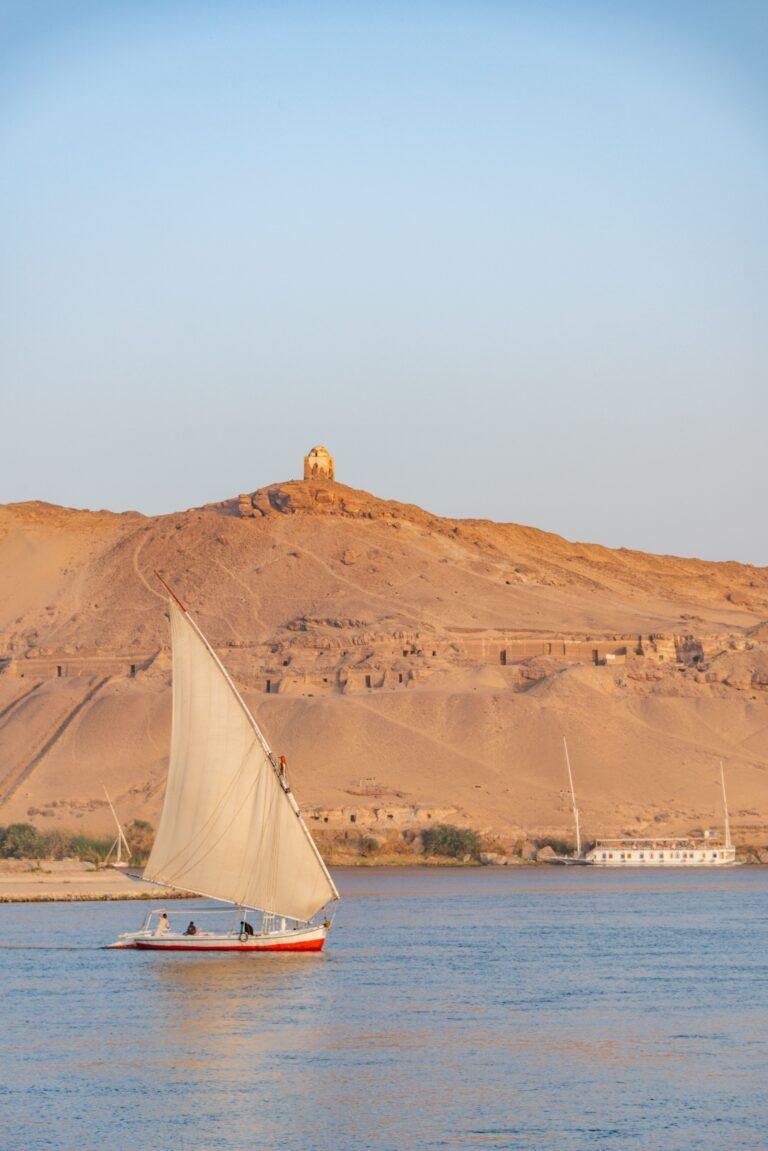
Short sunset sail experiences — often aboard traditional felucca sailboats — offer a peaceful contrast to the intensity of temple exploration.
As the sun sets over the West Bank cliffs, the sky reflects across the water while palm trees and small villages line the riverbanks.
After a day of exploring temples and tombs, this quiet time on the Nile allows the landscape of ancient Thebes to settle into perspective.
Nile-Side Evenings in Luxor
Luxor’s evenings often surprise travelers.
After the heat of the day fades, the city becomes far more relaxed. Restaurants and cafés along the Nile fill with visitors and locals enjoying cooler air and views of the river.
Dining near the Nile adds a different dimension to the Luxor experience. Instead of focusing solely on archaeology, the city begins to feel like a living place shaped by the same river that supported ancient Egyptian civilization.
For travelers who pace their days well, Luxor’s evenings become an opportunity to reflect on what they have seen — massive temples, decorated tombs, and a landscape that still echoes the power of ancient Thebes.
Luxor vs Cairo: Which Matters More?
Travelers planning their first trip to Egypt often ask whether Cairo or Luxor is the more important destination.
In reality, the two cities serve very different roles in understanding ancient Egypt.
Cairo introduces visitors to the origins of Egyptian civilization. The pyramids of Giza represent the earliest monumental achievements of the pharaohs, while the Egyptian Museum (and the Grand Egyptian Museum) preserve the artifacts that help explain how ancient Egyptians lived, ruled, and prepared for the afterlife.
Cairo provides the foundations of the story.
Luxor, however, offers something different: immersion.
Instead of viewing artifacts behind glass, visitors move directly through the spaces where ancient Egyptians built temples, conducted religious rituals, and buried their kings.
In Luxor, travelers walk through temple corridors at Karnak, stand among colossal statues at Luxor Temple, and descend into richly painted royal tombs in the Valley of the Kings.
The monuments are not simply objects of study — they are entire environments designed to communicate divine power and eternal life.
For this reason, many travelers who are especially interested in ancient Egypt often say that Luxor becomes the highlight of their trip.
Cairo explains the civilization.
Luxor allows you to step inside it.
Together, the two cities create a complete experience of Egypt’s past — one that moves from the pyramids and museums of the north to the monumental temples and sacred landscapes of ancient Thebes.
Frequently Asked Questions About Luxor Egypt Tours
Is one day enough for Luxor?
One day in Luxor is possible, but it usually feels rushed. The city contains two major archaeological zones — the East Bank and the West Bank — and each side deserves time to explore properly.
A typical one-day visit includes Karnak Temple, Luxor Temple, and the Valley of the Kings, but the pace can be intense, especially in the heat.
Most travelers find that two days is the minimum for a satisfying Luxor experience, allowing one day for the East Bank temples and another for the West Bank tombs and monuments. If you have three days, the experience becomes far more relaxed and immersive.
Is Luxor safe for tourists?
Yes. Luxor is one of Egypt’s main tourism centers and is built around international visitors. Major archaeological sites such as Karnak Temple, the Valley of the Kings, and the Temple of Hatshepsut are well managed and visited daily by travelers from around the world.
Like any travel destination, basic precautions apply: stay aware of your surroundings, use reputable guides or drivers, and keep your itinerary organized.
Most visitors find Luxor to be welcoming and easy to navigate, especially when tours and transportation are arranged in advance.
Do I need a guide in Luxor?
You can explore Luxor independently, but many travelers find that a knowledgeable guide dramatically improves the experience.
Luxor’s temples and tombs are filled with symbolic carvings, religious scenes, and historical references that are not immediately obvious without explanation. A guide helps connect these details to the larger story of ancient Egypt.
Instead of simply seeing monuments, visitors begin to understand how pharaohs used architecture, art, and ritual to communicate power and belief.
For travelers interested in the deeper meaning of the sites, guided Luxor Egypt tours often provide a far richer experience.
What is the must-see in Luxor?
The core highlights of Luxor are Karnak Temple and the Valley of the Kings.
Karnak is the largest temple complex in ancient Egypt and reveals the scale of religious architecture during the New Kingdom. The Valley of the Kings, located on the West Bank, contains the royal tombs of pharaohs including Tutankhamun.
Most visitors also add the Temple of Hatshepsut and a stop at the Colossi of Memnon to complete the West Bank experience.
Together, these sites form the essential Luxor itinerary and represent some of the most important monuments in all of ancient Egypt.
What is Luxor famous for?
Luxor is famous for its extraordinary concentration of ancient Egyptian monuments. The city was once known as Thebes, the capital of Egypt during the New Kingdom, when some of the most powerful pharaohs ruled the country.
Today Luxor contains several of Egypt’s most important archaeological sites, including Karnak Temple, Luxor Temple, the Valley of the Kings, and the Temple of Hatshepsut. These monuments form one of the largest collections of ancient temples and tombs anywhere in the world.
Because so many major sites are located within a relatively small area, Luxor is often described as the world’s greatest open-air museum, making it a highlight for travelers interested in ancient history and archaeology.
Final Thoughts: Why Luxor Belongs in Every Egypt Itinerary
Luxor represents the height of ancient Egypt’s power and ambition.
This was the city once known as Thebes, where New Kingdom pharaohs built some of the most extraordinary monuments ever created. Here, architecture was inseparable from religion, art functioned as a guide to the afterlife, and rulers constructed temples and tombs designed to last for eternity.
Walking through Luxor today means stepping directly into that world.
From the towering columns of Karnak Temple to the painted corridors of the Valley of the Kings, the monuments here reveal how deeply ancient Egyptians believed in divine kingship and eternal life.
Few destinations offer such an immersive connection to an ancient civilization.
For travelers interested in history, archaeology, or the cultural story of Egypt, Luxor is not simply another stop on an itinerary. It is one of the places where the civilization becomes tangible — where temples still dominate the landscape and the Nile still flows past the same riverbanks that shaped ancient Thebes thousands of years ago.
Plan Your Luxor Experience
Ready to experience ancient Thebes in the most unforgettable way?
Explore our curated Luxor Egypt tours designed to combine Karnak Temple, the Valley of the Kings, and Luxor’s West Bank monuments with thoughtful pacing and expert historical insight.
You can also visit our Luxor destination page to explore travel tips, site highlights, and itinerary ideas for building the perfect Luxor visit.
Planning a full trip through Egypt? See our guides to Cairo, Alexandria, and Nile cruise travel to build a complete Egypt itinerary.