How Egypt Thinks in Pairs
Egypt does not separate the world into simple opposites.
It understands life as pairs that depend on each other.
This way of thinking shaped the land, the temples, and the people themselves.
Once you recognize it, Egypt begins to feel balanced — not confusing.
Two Lands, One Kingdom
Egypt was never meant to be divided.
- Upper Egypt — long, narrow, closer to the river’s source
- Lower Egypt — wide, open, where the Nile spreads and feeds the Delta
They were different — but incomplete without each other.
That is why the king wore two crowns, joined as one.
Power existed only when balance was held.
Black Land and Red Land
Life followed another pair.
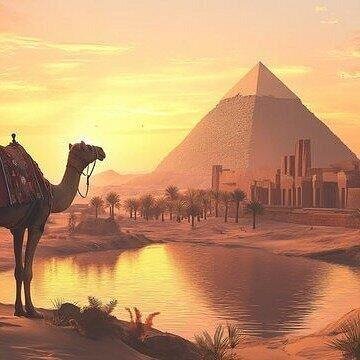
- Black Land — the dark soil along the river, rich with crops
- Red Land — the desert beyond, harsh but protective
One fed the people.
The other protected them.
Egypt did not call one “good” and the other “bad.”
They were both necessary.
East and West
When the sun rose, life began.
When it set, life rested.
That is why:
- towns and temples of daily life rise on the east bank
- tombs and memorials rest on the west bank
This was not superstition.
It was rhythm.
Ma’at: Balance Made Visible
All of these pairs lead to one idea: Ma’at.
Not perfection.
Not control.
Balance.
When you see mirrored statues, paired gods, or repeating scenes, you are not seeing decoration.
You are seeing balance made visible.
Practice
Look at one temple image or relief.
Notice:
- what is paired
- what is mirrored
- what is balanced
You do not need answers.
Noticing is enough.
This credit marks awareness, not memorization.
When you walk through Egypt with this understanding,
the land no longer feels divided.
It feels whole.