Is Egypt Safe for Kids?
What Families Should Know Before Visiting Egypt
Parents considering Egypt with children often want to know whether the trip will feel safe and manageable once they are actually there.
For families traveling through Egypt’s established tourism destinations, most of the things worth planning for are practical rather than unusual: busy traffic, heat and sun exposure, staying hydrated, walking through large archaeological sites, uneven ground, food and water precautions, and choosing activities that suit your child’s age and comfort level.
None of those should make Egypt feel out of reach for families. They simply mean that traveling with children requires a little more planning than traveling as adults. Knowing what to expect before you arrive makes it much easier to build a trip that feels comfortable for both parents and children.
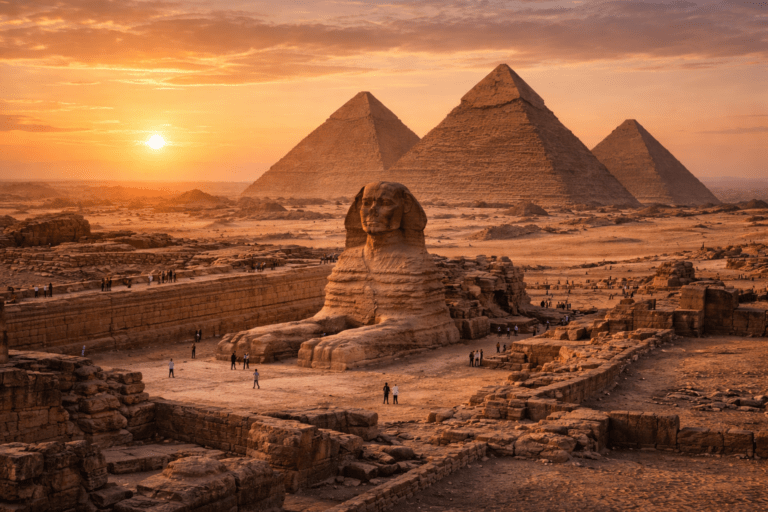
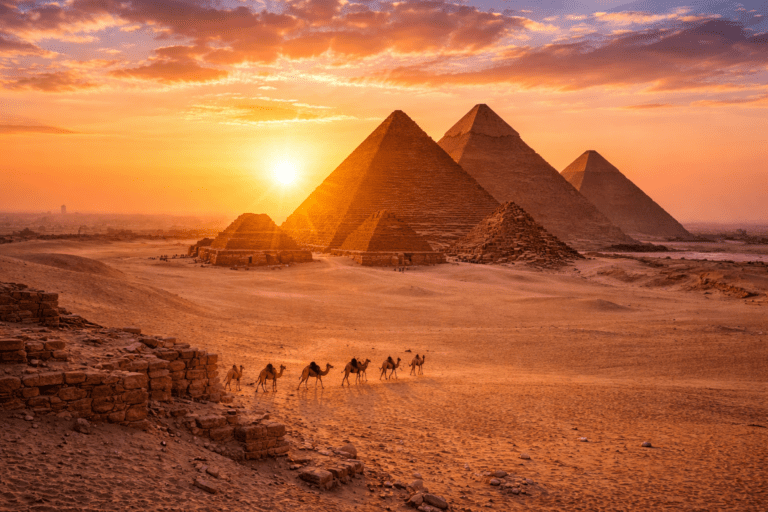
Every year, thousands of families travel to Egypt to experience its extraordinary mix of history, culture, and natural beauty. Children can stand in front of the Pyramids of Giza, explore ancient temples in Luxor, sail along the legendary Nile River, and swim or snorkel in the clear waters of the Red Sea. Few destinations offer such a powerful opportunity for children to see world history come to life right in front of them.
That said, Egypt is very different from a typical beach vacation. It is a vast country with a long history, vibrant cities, and cultural traditions that may feel unfamiliar to first-time visitors. Travel days can involve early starts, warm weather, and visits to large archaeological sites that require walking and patience. Because of this, family trips to Egypt benefit greatly from thoughtful planning, comfortable pacing, and well-organized itineraries.
Understanding how travel works in Egypt helps families avoid common stress points and turn the journey into an exciting adventure rather than an overwhelming experience. When families plan wisely—choosing the right destinations, scheduling downtime, and traveling with knowledgeable guides—Egypt can become an educational playground for curious young travelers.
For many children, visiting Egypt becomes one of the most memorable trips of their lives. Standing before monuments that are more than 4,000 years old, sailing past villages along the Nile, discovering colorful coral reefs in the Red Sea, or entering a real pharaoh’s tomb can spark curiosity about history, science, and culture in ways that no classroom lesson ever could.
In this guide, we’ll explain what families should realistically expect when traveling in Egypt with children, including:
- Safety considerations for families visiting Egypt
- How transportation and logistics work when traveling with kids
- Health, weather, and comfort considerations
- Practical tips that help make a family trip smooth and enjoyable
With the right preparation, Egypt can be one of the most exciting and educational family travel destinations in the world—a place where history becomes an adventure that children will remember for years to come.
Is Egypt Safe for Families?
For families visiting Egypt’s main tourism destinations, the most useful safety questions are usually practical ones: how to manage traffic, heat, long sightseeing days, transportation, crowded attractions and the physical conditions at archaeological sites. Knowing what those conditions are like before the trip makes it much easier to plan comfortably with children.
Most family trips focus on a few key regions where tourism infrastructure is well established and travel logistics are relatively straightforward. These destinations include:
- Cairo and the Pyramids of Giza – home to the iconic pyramids, the Sphinx, and major museums such as the Egyptian Museum and the Grand Egyptian Museum.
- Luxor and the temples of Upper Egypt – often described as the world’s largest open-air museum, with remarkable sites like Karnak Temple, the Valley of the Kings, and Luxor Temple.
- Aswan and the Nile River – known for its relaxed atmosphere, scenic Nile views, and historic landmarks such as Philae Temple and Abu Simbel nearby.
- Red Sea resort areas such as Hurghada and Sharm El Sheikh – popular family destinations offering calm beaches, snorkeling, diving, and resort-style accommodations.
Families who travel with reputable tour providers, licensed guides, and experienced drivers often find Egypt far more comfortable and organized than they initially expected. Professional guides can help manage logistics, explain historical sites in engaging ways for children, and ensure that itineraries move at a pace that works for families.
Like travel anywhere in the world, good preparation makes a major difference. Understanding travel distances, planning realistic daily schedules, and relying on local expertise can help families avoid common travel stresses.
With thoughtful planning, many families discover that Egypt is not only manageable but deeply rewarding, offering children a chance to experience ancient history, different cultures, and unforgettable landscapes in one extraordinary trip.
Why Egypt Is Actually Great for Kids
At first glance, Egypt may seem like a destination designed mainly for history enthusiasts. In reality, many children find Egypt surprisingly exciting, because the country blends adventure, outdoor activities, and hands-on history in ways that naturally capture young imaginations.
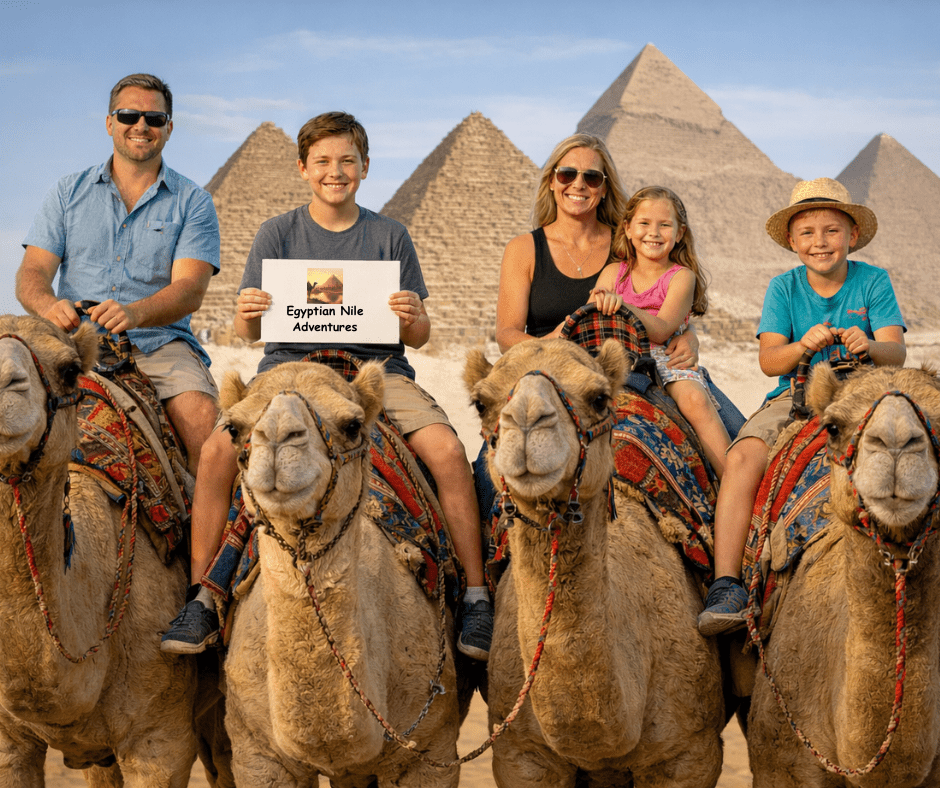
Ancient Egypt is one of the few historical topics that already fascinates many kids before they even arrive. Pharaohs, pyramids, hieroglyphs, and mummies appear frequently in school lessons, books, movies, and documentaries. When children suddenly find themselves standing in front of the real pyramids or walking through ancient temples that are thousands of years old, the experience can feel almost magical.
Beyond the historical sites, Egypt also offers a wide range of fun outdoor activities that make the trip feel like an adventure rather than a history lesson.
Some experiences that children often love include:
- Seeing the Pyramids of Giza up close and realizing just how massive they really are
- Riding camels near the pyramids or exploring desert landscapes on horseback
- Quad biking across desert dunes around the pyramids or in Red Sea resort areas
- Sandboarding on desert dunes, which many kids find just as fun as snowboarding
- Super Safari desert adventures, which often include dune driving, camel rides, Bedouin camps, and traditional dinner experiences
- Overnight desert camping, where families can watch the stars in the quiet desert sky
- Exploring colorful tomb paintings in the Valley of the Kings, where ancient artwork still looks vivid after thousands of years
- Sailing on the Nile in a traditional felucca boat, a peaceful way to experience the river that shaped Egyptian civilization
- Snorkeling among coral reefs in the Red Sea, where children can see colorful fish and marine life in clear water
- Visiting Nubian villages in southern Egypt, where kids can experience local culture, bright colors, and warm hospitality
Because Egypt combines ancient history, desert adventures, river journeys, and marine life, it offers a variety of experiences that help keep children engaged throughout the trip.
Egypt also gives families enough variety to break up consecutive days of archaeological sightseeing. A child who has reached their limit with temples may be much more interested in getting onto the Nile, spending time by the water or doing something outdoors.
The important part is choosing experiences that match your own children’s interests rather than trying to include every activity that is described as family-friendly. That variety can make Egypt particularly rewarding for families because the trip does not have to revolve around historical sites every day.
For more ideas, our Things to Do in Egypt With Kids guide looks more closely at activities families can choose in different parts of the country.
Safety in Egypt’s Main Travel Destinations
Most family itineraries concentrate on Cairo and Giza, Luxor, Aswan, the Nile cruise corridor and, for some families, the Red Sea. What parents need to prepare for is different in each place.
In Cairo and Giza, traffic, crowds and the size of the city usually require the most adjustment. In Luxor and Aswan, heat, sun exposure and the physical conditions at archaeological sites become more important. At Red Sea destinations, sun and water safety deserve more attention.
Looking at those practical differences is more useful to families than treating “safety in Egypt” as one single question.
Cairo
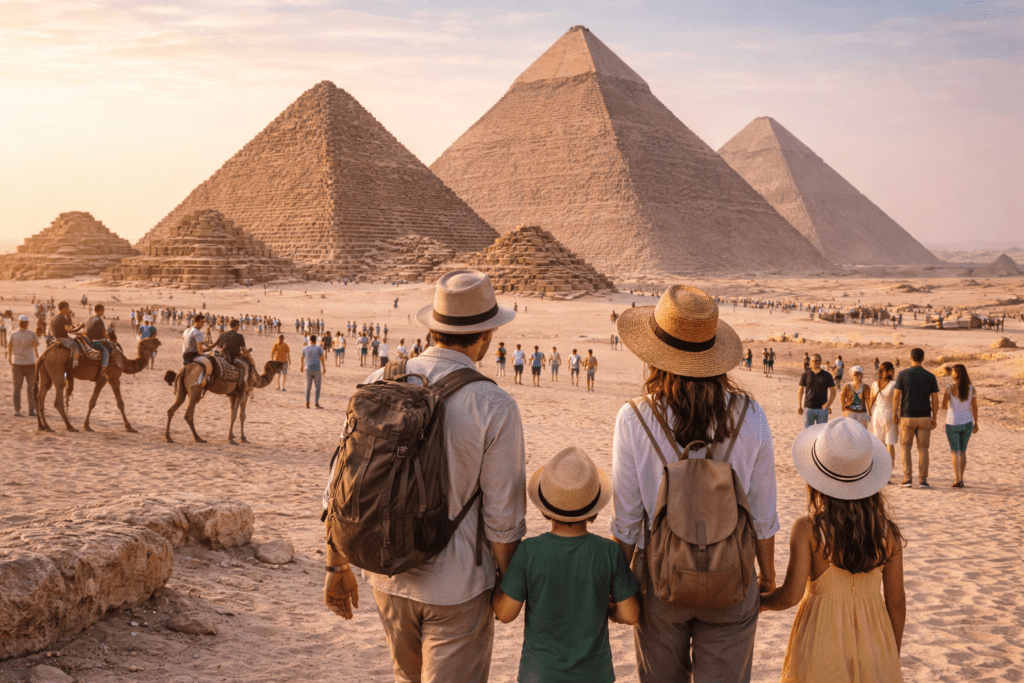
Cairo is Egypt’s largest city and the starting point for most trips. Like many major global capitals, Cairo can feel busy and chaotic at first. Traffic is intense, streets are lively, and the pace of daily life is energetic. It is one of the everyday differences families may notice quickly in Cairo. Roads can be busy, and crossing streets may feel very different from what children are accustomed to at home. Keep younger children close around traffic and use transportation when a route is not comfortable to walk rather than assuming that a short distance on a map will necessarily be an easy walk with children.
Families typically spend their time visiting:
- The Pyramids of Giza and the Great Sphinx
- Museums such as the Grand Egyptian Museum
- Islamic Cairo and historic mosques
- Khan el-Khalili Bazaar
Because Cairo is such a large city, many families find that using a private guide or driver makes sightseeing far easier, allowing them to move efficiently between sites without worrying about transportation or navigation.
Luxor
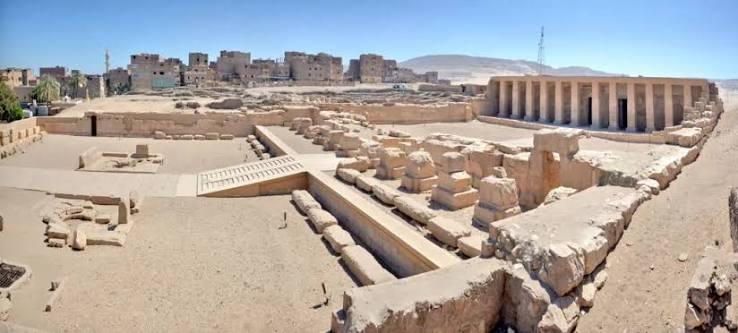
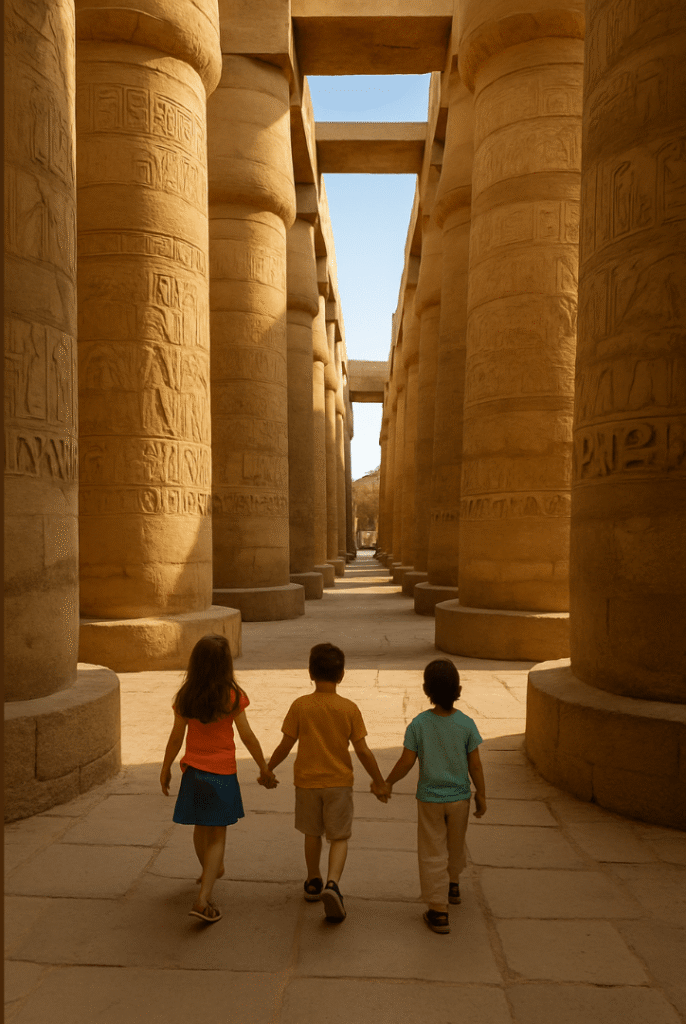
Luxor is often called the world’s greatest open-air museum. Much of the area is part of the Ancient Thebes UNESCO World Heritage Site, which includes Karnak Temple, Luxor Temple, and the royal tombs in the Valley of the Kings.
Major sites include:
- Karnak Temple
- Luxor Temple
- The Valley of the Kings
- The Temple of Hatshepsut
Compared with Cairo, Luxor is smaller, calmer, and very tourism-focused. Families often find it easier to explore because the major sites are concentrated within a relatively small area on the east and west banks of the Nile.
Nile River Cruises
One of the most comfortable and family-friendly ways to explore Upper Egypt is through a Nile River Cruises
A Nile cruise can simplify part of a family trip because you remain on the same vessel while traveling between several Upper Egypt stops. That means fewer hotel changes and less repeated packing and unpacking.
It does not automatically mean several days of effortless sightseeing. Cruise excursions can begin early, and much of the itinerary still revolves around archaeological sites. Families with children who enjoy temples and ancient history may find that rhythm works very well, while other children may need more downtime between visits.
The vessel itself matters too. Cabin arrangements, stairs, railings and the general layout can vary, so parents should look at the actual cruise being offered rather than assuming every Nile cruise works equally well for every family.
Do not assume that a particular recreational facility, including a swimming pool, will be available unless it is confirmed for your vessel. Meals, sightseeing, transfers and other inclusions should also be checked against the particular cruise or package being booked.
For many families, the biggest advantage is logistical: several destinations can be combined without changing hotels every day. Whether the cruise itself feels relaxing will depend on the itinerary, vessel and your children’s tolerance for the sightseeing schedule.
Check out our Nile Cruise with Kids Guide.

Aswan
Aswan is known for its relaxed atmosphere and beautiful Nile scenery. Compared with Cairo and Luxor, it has a much slower pace that many families appreciate after several busy sightseeing days.
Families visiting Aswan often enjoy:
- Philae Temple
- Boat rides on the Nile
- Visits to colorful Nubian villages
- Day trips to Abu Simbel
Abu Simbel deserves a little more thought when traveling with children because the visit involves more than the time spent at the temples. Families should consider the early start and length of the journey from Aswan as part of the decision. Whether it fits comfortably into the itinerary depends on the child’s age, tolerance for long journeys and how demanding the surrounding days already are.
The calm environment and scenic river views often make Aswan feel like a peaceful break during a longer Egypt itinerary.
Red Sea Destinations
After exploring Egypt’s historical sites, many families include time at the Red Sea coast to relax and enjoy outdoor activities.
Popular destinations include:
These resort areas offer a very different pace from Egypt’s archaeological sightseeing and can give families time for swimming, beach activities and less structured days.
Activities often include:
- Snorkeling and diving among coral reefs
- Boat trips to nearby islands and marine parks
- Beach resorts with family facilities
- Desert excursions, with activities selected according to the child’s age and the operator’s participation requirements such as quad biking, sandboarding, and safari experiences
For many families, time at the Red Sea provides the perfect balance after several days of historical exploration, allowing children to relax, swim, and enjoy adventure activities before returning home.

Health and Comfort When Traveling With Kids
Egypt’s climate, environment, and travel pace can feel very different from what many families are used to. With a little preparation, however, parents can ensure that children remain comfortable and enjoy the experience throughout the trip.
Planning ahead for heat, hydration, and daily pacing makes a significant difference, especially when visiting outdoor historical sites such as temples, pyramids, and archaeological areas.
Hydration
Egypt’s climate is hot and dry for much of the year, particularly in southern regions like Luxor and Aswan. Even in cooler months, the desert air can cause dehydration more quickly than many travelers expect.
Families should make sure that children drink water regularly throughout the day, especially during sightseeing. Bottled water is widely available at hotels, shops, and tourist sites, and most travelers rely on it during their stay.
Carrying water during tours helps children stay comfortable while exploring outdoor sites.
Sun Protection
Egypt receives strong sunlight year-round, and many historical sites provide limited shade. Protecting children from the sun is important, particularly during long outdoor visits.
Families should consider packing:
- Wide-brimmed hats or caps
- High-SPF sunscreen
- Lightweight, breathable clothing
- Sunglasses
Light-colored clothing made from breathable fabrics can help children stay cooler during warm days.
Many families also plan sightseeing earlier in the morning, when temperatures are more comfortable.
Walking Through Archaeological Sites With Children
Some of Egypt’s most famous attractions are physically very different from museums or paved family attractions.
Families may encounter sand, uneven stone, steps, exposed areas with limited shade and longer walking distances than expected. Tomb entrances can involve stairs or sloping passages, and conditions vary considerably from one site to another.
This matters particularly with toddlers and very young children. A stroller can be useful during some parts of the trip but impractical on sand, steps and uneven archaeological terrain. A carrier may be more useful at certain sites.
Parents also do not need to complete every section of every site. When children are hot or tired, shortening a visit is usually better than pushing through simply because something was included in the day’s plan.
Food and Water
Children can usually find both Egyptian dishes and familiar, simple foods during a trip. From a health perspective, however, how food and water are handled matters more than whether familiar foods are available.
Keep children well hydrated, particularly during outdoor sightseeing, and carry drinking water rather than waiting until someone becomes thirsty. Be cautious with food that appears to have been sitting unrefrigerated for long periods or has not been handled appropriately.
Families dealing with food allergies or medical diets should communicate the restriction clearly rather than assuming every restaurant, hotel or cruise kitchen will interpret it in exactly the same way. If an allergy is serious, carry the medication your child may need and have a clear way to communicate the allergy when ordering food.
It is also sensible to bring the basic medications you normally rely on for your children rather than expecting to find the exact same brands or formulations after arrival.
Transportation Tips for Families
Egypt’s most famous destinations are spread across different parts of the country, so transportation planning plays an important role in creating a smooth family trip. Choosing the right combination of travel options can help reduce long travel days and keep children comfortable throughout the journey.
Most family itineraries use a combination of:
- Domestic flights
- Nile cruises
- Private drivers for local sightseeing and day trips
Domestic Flights
Because Egypt is a large country, domestic flights are often the fastest and most comfortable option for families traveling between major destinations.
Common flight routes include:
- Cairo → Luxor
- Cairo → Aswan
- Cairo → Hurghada or Sharm El Sheikh
Flights usually take about one hour, which can save many hours compared with traveling by road or train. For families with children, this helps reduce fatigue and allows more time to enjoy sightseeing rather than spending long periods in transit.
Private Drivers and Guided Tours
Within each destination, many families choose to travel with private drivers and licensed guides. This makes it easier to move between sites without navigating unfamiliar transportation systems.
Benefits for families include:
- Flexible schedules that allow breaks when children need them
- Direct transportation between hotels and attractions
- Local knowledge that can help families plan realistic timing, navigate large sites, and adjust the day when children need a break
Private transportation can make multi-stop sightseeing days easier to manage with children because the vehicle remains part of the day’s logistics rather than requiring the family to arrange a new ride between each stop.
Families traveling with younger children should also think about child restraints before arrival. If a particular type of car seat or booster is important for your family, arrange it in advance rather than assuming the correct restraint will automatically be available with every vehicle.
What Age Is Best for Visiting Egypt With Kids?
There is no single best age for taking children to Egypt. What changes with age is the way the trip needs to be planned.
With babies and toddlers, shade, naps, carrying options and shorter sightseeing periods become more important. School-age children may begin connecting more readily with the pharaohs, tombs, mummies and ancient stories they encounter along the way. Teenagers can often manage longer sightseeing days, although their interests and tolerance for repeated archaeological visits still vary considerably.
The deciding factor is the individual child rather than an age on a chart. A seven-year-old fascinated by ancient Egypt may happily spend much longer at a temple than a twelve-year-old who has little interest in archaeology.
Build the pace around the children you are actually traveling with rather than trying to reach a particular “ideal” age before visiting Egypt.
Pace Is Part of Keeping a Family Trip Comfortable
Safety and comfort are closely connected to pace. A trip becomes harder for children when too many early starts, long transfers and major sightseeing days are stacked together without enough recovery time.
Earlier sightseeing can also help during warmer weather, particularly at exposed archaeological sites. But the right pace depends on the individual child rather than trying to follow the same schedule every day.
Our Egypt With Kids family guide covers the larger planning decisions, including age, trip length, pacing, transportation and how to balance sightseeing with downtime.
Cultural Tips for Families Visiting Egypt
Egyptian culture is welcoming and family-oriented, and children often receive warm attention from locals. Understanding a few cultural norms can make the experience smoother.
Dress for the setting
Clothing expectations depend on where the family is going. Ordinary lightweight travel clothing is appropriate for most sightseeing, while more conservative clothing is appropriate when visiting mosques and some more traditional settings. Resort and beach environments are different again. For children, comfort in the heat should remain a priority.
Respect religious sites
When visiting mosques, visitors may need to remove their shoes and dress modestly. Guides usually explain these customs beforehand.
Photography etiquette
Photography is allowed at most outdoor sites, but some museums and tombs may have restrictions. It is polite to ask permission before photographing local people.
Interactions with children
Families may find that children attract friendly attention during everyday interactions. People may smile, wave, start a conversation or ask about the children.
Parents can handle those interactions according to the same boundaries they use elsewhere. Children do not have to pose for photographs, continue a conversation or accept physical contact if they are uncomfortable. If someone asks to photograph your child, you can simply decline.
A Few Family Essentials Worth Carrying
You do not need a special packing list simply because you are visiting Egypt, but a few items make long sightseeing days with children easier:
- refillable water bottles or an easy way to carry enough drinking water;
- hats and sunscreen;
- comfortable walking shoes;
- any essential prescription medication;
- the basic medicines and first-aid items your family normally uses;
- hand sanitizer or wipes for sightseeing days; and
- a carrier for younger children if you will visit sites where a stroller is impractical.
The most useful items are the ones that help you manage heat, walking, hydration and the normal minor problems that can interrupt a family sightseeing day.
Heat Matters More When Traveling With Children
For family travel, season matters primarily because so much sightseeing in Egypt takes place outdoors.
October through April generally provides more comfortable conditions for long archaeological visits, while hotter months require more deliberate planning around the heat. Earlier starts, shorter outdoor sightseeing periods, shade breaks, hats, sunscreen and regular hydration become increasingly important.
That does not mean families cannot visit during warmer months. It means the itinerary needs to respond to the conditions rather than trying to maintain the same sightseeing pace throughout the year.
For a fuller month-by-month comparison, see our Best Time to Visit Egypt guide.
Travel Insurance and Medical Preparation
Families should travel with appropriate insurance and bring enough of any prescription medication a child needs for the trip, along with a little extra in case of disruption.
Keep essential medication in your hand luggage when flying rather than placing all of it in checked baggage. If medication requires special storage, arrange that before travel.
Medical facilities and pharmacies are available in Egypt’s major cities and resort areas, although the services available will vary. Before departure, know how your travel insurer expects you to obtain assistance if a child becomes ill or needs treatment.
For everyday sightseeing, a small family first-aid kit containing the items you normally use for minor problems can also save time trying to locate a familiar product while traveling.
Frequently Asked Questions
Is Egypt safe for kids to visit?
For families traveling through Egypt’s established tourism destinations, most of the issues worth planning around are practical ones such as traffic, heat, hydration, busy sightseeing sites, uneven archaeological terrain, food and water precautions, and choosing activities appropriate for the child.
Is Cairo safe to visit with kids?
Cairo can initially feel intense because of its traffic, crowds and scale. Keep younger children close around roads, allow enough time between activities and use transportation when a route would be uncomfortable to walk with children.
Do I need a car seat for my child in Egypt?
If a particular child restraint is important for your family, arrange it before the trip rather than assuming the appropriate seat will automatically be available in every vehicle. Confirm what will actually be provided when booking transportation.
Are Nile cruises suitable for children?
They can work very well for families, particularly because they reduce repeated hotel changes while traveling through Upper Egypt. Suitability depends on the individual vessel, cabin arrangement, physical layout and sightseeing schedule, as well as how much the children enjoy archaeological visits. Check the actual cruise rather than assuming all Nile vessels offer the same facilities.
Can children visit the pyramids and ancient temples?
Yes. Parents should expect heat, sun exposure, walking and uneven surfaces at many archaeological sites. Comfortable shoes, hats, water and realistic visit lengths make a considerable difference. Strollers will not be equally practical at every site.
Are desert activities suitable for children in Egypt?
It depends on the activity, the child and the operator’s participation requirements. Camel riding, sandboarding, 4×4 excursions and quad biking should not be treated as interchangeable. Ask about age or size restrictions, safety equipment and exactly how the child will participate before booking.
Final Thoughts: Is Egypt a Good Family Destination?
Egypt is one of the rare destinations where history, adventure, and cultural discovery come together in a way that truly captures children’s imagination. Few places allow families to stand in front of monuments that are more than 4,000 years old, explore ancient temples carved with hieroglyphs, sail along the Nile River, and then relax on the beaches of the Red Sea—all within a single trip.
While Egypt may feel very different from a typical family vacation, that difference is often exactly what makes it so memorable. With thoughtful planning, realistic pacing, and the right mix of activities, families can create an experience that is both exciting and comfortable for children of many ages.
From camel rides at the Pyramids of Giza to exploring the tombs in the Valley of the Kings, sailing the Nile on a cruise, or snorkeling among colorful coral reefs, Egypt offers moments that children often remember for the rest of their lives.
For many families, a trip to Egypt becomes more than just a vacation—it becomes a journey through one of the world’s most fascinating civilizations.
Planning a Family Trip to Egypt?
If you’re considering visiting Egypt with kids, careful planning can make the experience smoother, safer, and far more enjoyable.
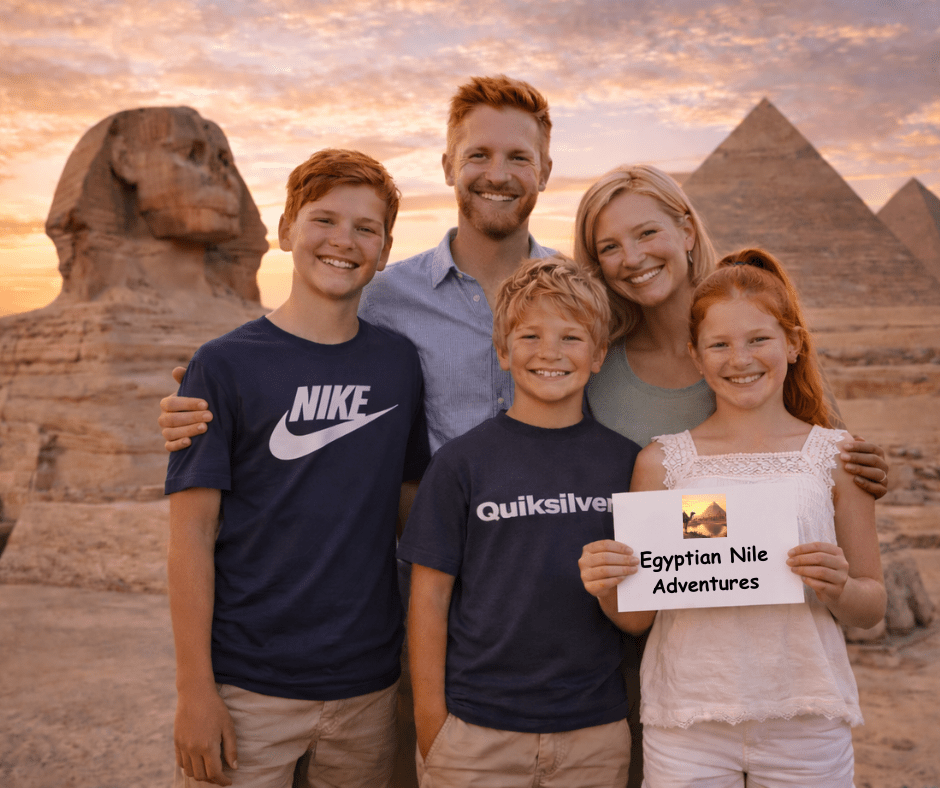
At Explore Egyptian Nile Adventures, we specialize in helping families create well-balanced itineraries that combine:
- Iconic historical sites like the Pyramids, Luxor temples, and Abu Simbel
- Relaxing Nile cruises between Luxor and Aswan
- Adventure activities such as desert safaris, quad biking, and sandboarding
- Family-friendly time at Red Sea resorts
- Comfortable transportation and knowledgeable local guides
Our goal is to help families experience Egypt in a way that is engaging for children, educational for everyone, and paced comfortably throughout the journey.
👉 Explore our Egypt tours and start planning your adventure today.